
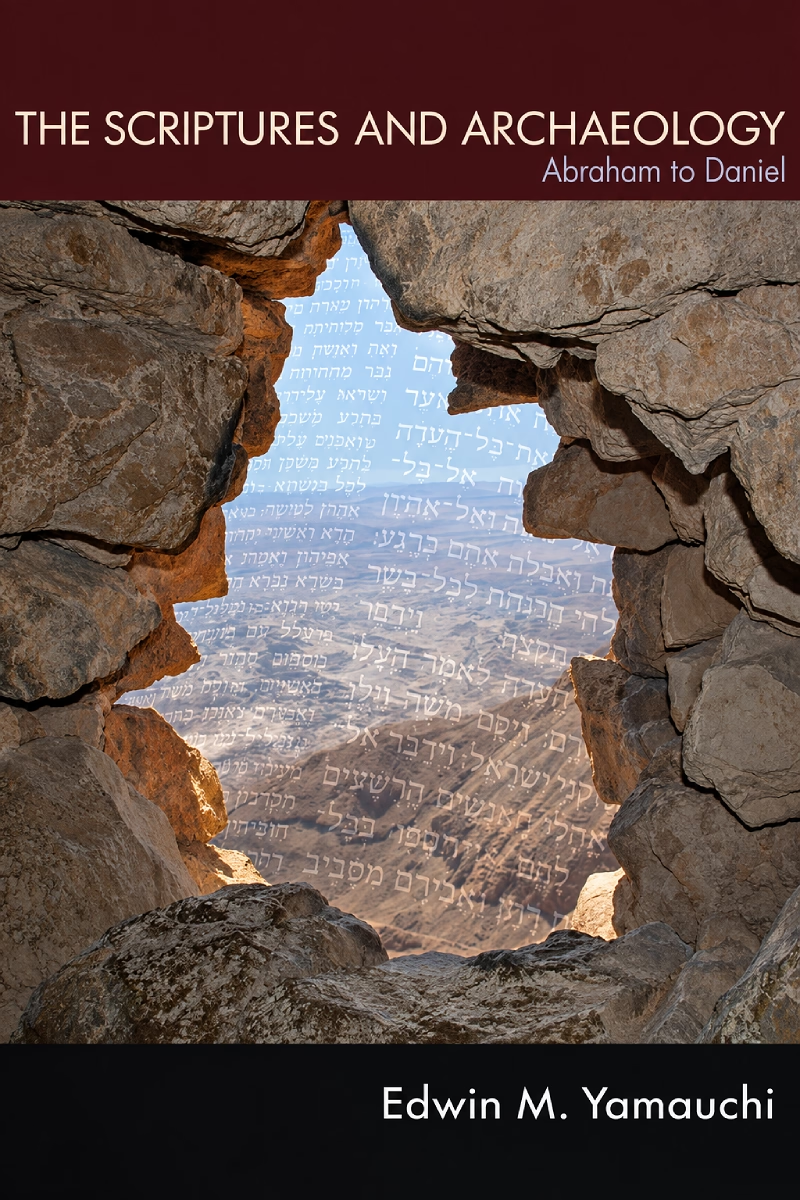
The Scriptures and Archaeology: Abraham to Daniel
This compact study surveys archaeological evidence from Abraham through Daniel, tracing the patriarchal age, Exodus and conquest, the judges, Israel’s monarchy, Assyrian pressure, and the Babylonian period. Yamauchi weighs both confirmations and problems in the evidence, showing how archaeology clarifies the historical setting of major Old Testament events without oversimplifying its limits.
Available Instantly
About This Book
The Scriptures and Archaeology: Abraham to Daniel is Edwin M. Yamauchi’s compact survey of Old Testament biblical archaeology, adapted from his Bueermann-Champion lectures. Moving from the patriarchal period through the Babylonian age, the book uses archaeological discoveries, inscriptions, ancient Near Eastern records, and historical questions to illuminate the setting of the biblical narrative. Yamauchi combines a high view of Scripture with careful attention to the limits and complexity of archaeological interpretation, asking what the surviving evidence can actually establish rather than treating archaeology as a simple collection of proofs.
The opening portion considers Abraham and the patriarchal age. Yamauchi places the Genesis narratives within the world of the second-millennium ancient Near East and examines evidence that has been used to relate the patriarchs to discoveries from sites and archives such as Mari, Nuzi, and other cultures. He also considers later reassessments of claims that once appeared to provide straightforward archaeological parallels. The result is a study of patriarchal archaeology that distinguishes genuine historical illumination from arguments that ask more of the evidence than it can bear.
The discussion then turns to Moses, Israel in Egypt, the Exodus, and the conquest of Canaan. Archaeological questions concerning chronology, Egyptian background, migration, settlement, and the destruction or occupation of Canaanite cities are treated as part of the historical problem. Jericho receives particular attention because of the importance of its excavation history to discussions of Joshua. Yamauchi separates the archaeological data at a site from the larger historical conclusions drawn from it, allowing both evidence and unresolved questions to be considered without assuming that the absence of expected evidence automatically settles the biblical question.
The period of the judges and the rise of the monarchy carry the survey forward. Archaeological evidence connected with Philistine culture, settlement, writing, and literacy helps place the narratives of Judges within their ancient setting. With the monarchy and divided kingdoms, the available external evidence becomes considerably denser. Assyrian inscriptions and royal records provide major points of contact with people and events known from Kings and the prophetic historical setting.
Specific intersections include the battle of Qarqar and Ahab, the expansion of Assyrian power under Tiglath-pileser III, the fall of Samaria, and Sennacherib’s campaign against Judah. Lachish is especially important because excavated remains, Assyrian reliefs and records, and the biblical account can be brought into direct historical comparison. These cases show both the value of external records for reconstructing Old Testament history and the need to distinguish ancient propaganda, archaeological remains, and biblical testimony before drawing conclusions.
The final movement reaches the Babylonian period and Daniel. Yamauchi places the book’s historical setting within the transition from Assyrian to Babylonian dominance and the reign of Nebuchadnezzar, using Babylonian evidence to clarify the exilic world. Daniel also becomes part of the archaeological and historical-reliability discussion itself: questions about names, language, chronology, and the historical background of the court narratives are considered in relation to what is known from ancient sources. This gives Daniel meaningful treatment rather than making it merely the chronological endpoint named in the title.
Across the study, archaeology is never treated as a substitute for the biblical text. Yamauchi repeatedly emphasizes the incompleteness of surviving evidence, the danger of arguments from silence, and the distinction between an artifact or inscription and the historical reconstruction built from it. The book therefore helps readers understand both the apologetic value of archaeology and why archaeological problems or gaps do not automatically amount to disproof.
The book addresses readers asking what archaeology can actually say about Abraham, the Exodus, Jericho, the judges, Israel’s kings, Assyria, Lachish, the Babylonian exile, and Daniel; how ancient inscriptions relate to Old Testament events; whether archaeological difficulties necessarily undermine the historical reliability of Scripture; and how archaeological evidence should be weighed when reconstructing biblical history. Its strongest search value is biblical archaeology, the historical reliability of the Old Testament, and the major archaeological questions spanning Genesis through Daniel.
Book Details

Reading Fit
STUDY LEVEL
Advanced, Intermediate
STUDY SCOPE
Old Testament, Topical
BOOKS INCLUDED

Edition & Format
PUBLISHED
June 1, 2013
AVAILABLE FORMATS
paperback
LENGTH
58 pages

Topics Covered
You Might Also Like