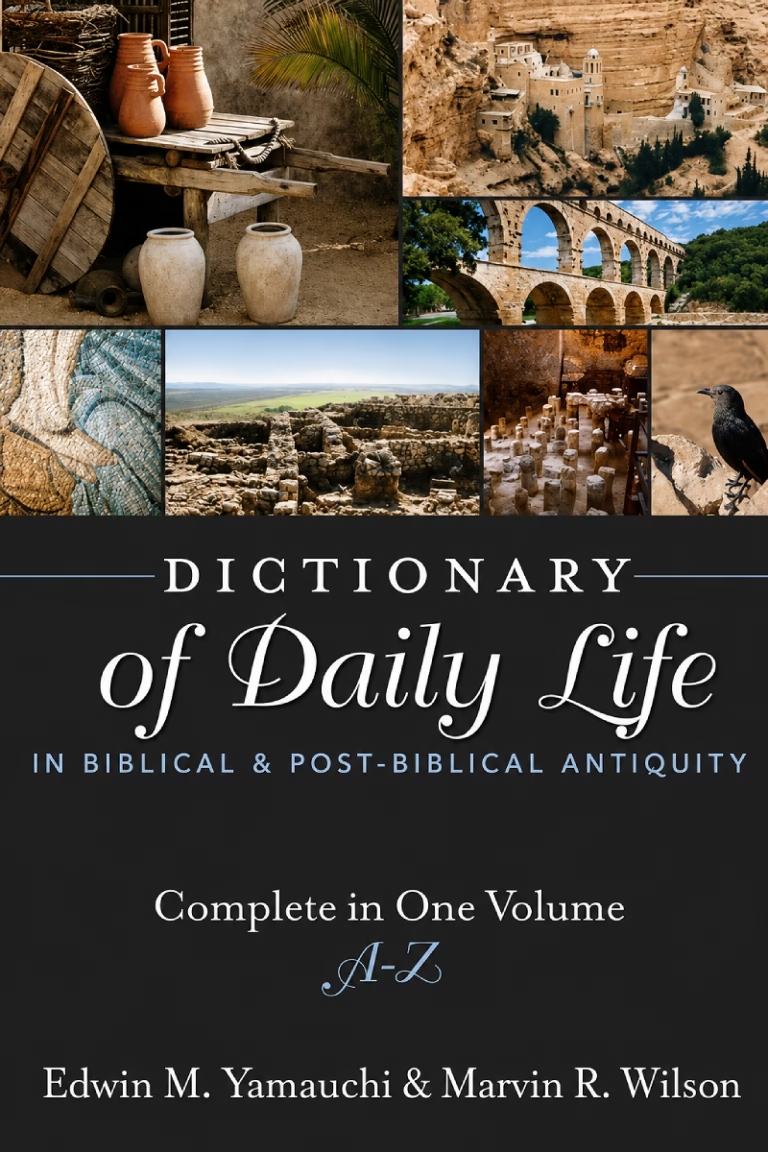

Dictionary of Daily Life in Biblical & Post-Biblical Antiquity: Leather
This focused reference study explains leather in the biblical world: animal hides, tanning and leatherworking, goatskins, sandals, parchment, and other uses of skin. It follows the subject through the Hebrew Bible and New Testament and places it within the ancient Near East, Greco-Roman world, and later Jewish and Christian communities to clarify the material culture behind Scripture.
Available Instantly
About This Book
Dictionary of Daily Life in Biblical and Post-Biblical Antiquity: Leather is a focused reference article on leather as a material, craft, and part of everyday life in the biblical world. Extracted from the larger Dictionary of Daily Life in Biblical and Post-Biblical Antiquity, it follows the series’ comparative method by examining the subject in the Hebrew Bible and New Testament and then placing it alongside evidence from the ancient Near East, Greco-Roman society, and later Jewish and Christian communities. Its purpose is to supply the cultural and technical background that ancient readers could assume but modern readers often lack.
The study treats leather first as processed animal skin. Its indexed terminology includes hides, skin, goatskins, leather makers, tanneries, tanning agents, the tanning process, and untanned material, showing that the article is concerned not simply with references to leather objects but with how leather was produced and prepared. This gives context for a craft that depended on animal products and specialized labor and that supplied durable material for clothing, footwear, containers, writing, and other practical uses. By tracing tanning and leatherworking across different cultures, the article helps readers distinguish the raw hide from the finished product and understand why leather was useful in the ancient economy.
The article also develops the range of objects made from leather. Sandals and other wearable uses appear within the indexed subject matter, as do goatskins and parchment. Parchment connects leatherworking with the production and preservation of written texts, while the treatment of skins and hides connects the subject with domestic life, travel, clothing, and material technology. The presence of terms associated with Qumran, the Dead Sea Scrolls, rabbinic literature, the Jerusalem Talmud, the Mishnah, early Christian writers, and Greco-Roman sources reflects the article’s chronological reach beyond the biblical period and its effort to show how the manufacture and use of leather continued and developed in Jewish and Christian antiquity.
Biblically, the study draws on both Testaments rather than treating leather as a single isolated word. The article’s biblical evidence includes Exodus and Numbers, which contain important uses of animal skins and hide materials within Israel’s wilderness life and sacred furnishings. The article’s broader biblical-reference framework allows readers to understand references to skins, footwear, parchment, and related materials in light of the ancient technologies that produced them. The emphasis remains material and historical: what these objects were, how they were made, and how they functioned within the cultures in which biblical texts were written and read.
The ancient Near Eastern and Greco-Roman sections widen the comparison. They place Israelite and early Christian evidence alongside neighboring societies that also processed animal skins and used leather for practical, military, domestic, and written purposes. Post-biblical Jewish and Christian evidence then extends the discussion toward approximately AD 600. This comparative sequence helps answer questions such as how tanning worked in antiquity, what a tannery was, what kinds of animal skins were used, how parchment relates to leather, what leather sandals and other goods were like, and what cultural associations leatherworkers and their trade carried.
For readers studying a passage that mentions skins, leather goods, sandals, parchment, or tanning, the article supplies concentrated background rather than a broad survey of unrelated biblical themes. Its search value therefore lies in leather itself, the technology of tanning and leatherworking, the uses of hides and goatskins, ancient footwear and leather goods, parchment, and the Jewish, Christian, Greco-Roman, and ancient Near Eastern settings in which these materials were made and used.
Book Details

Reading Fit
STUDY LEVEL
Advanced, Intermediate
STUDY SCOPE
New Testament, Old Testament, Topical
BOOKS INCLUDED

Edition & Format
PUBLISHED
May 17, 2022
AVAILABLE FORMATS
kindle
LENGTH
105 pages

Topics Covered
You Might Also Like