

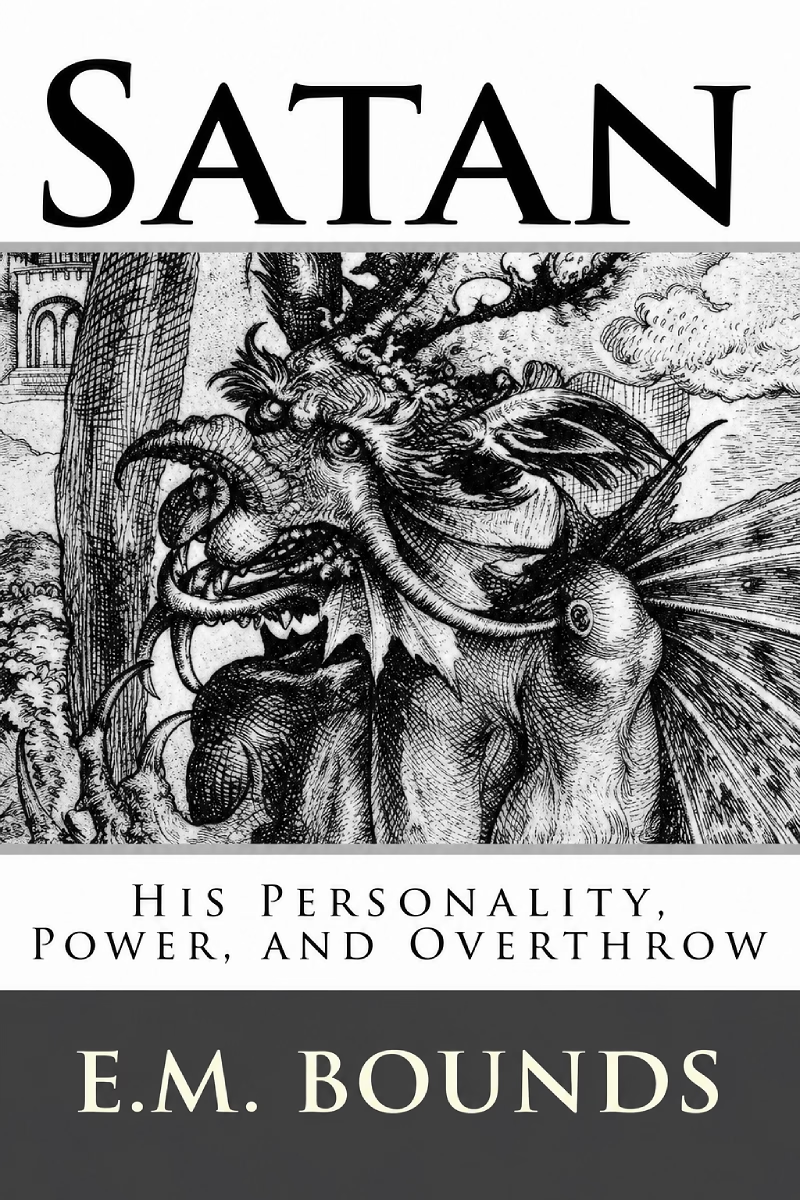
Satan: His Personality, Power, and Overthrow
E. M. Bounds presents Satan as a real personal adversary whose power, rule, methods, and opposition to the Church must be understood biblically. Moving from his beginning and activity in the world to deception, temptation, vulnerable spiritual positions, and Christian defense, Bounds emphasizes vigilance, resistance, the armor of God, faith, Scripture, and prayer.
Available Instantly
About This Book
Satan: His Personality, Power, and Overthrow is E. M. Bounds’s sustained biblical study of the devil as a personal, active spiritual adversary. Rather than treating Satan as a symbol, abstract influence, or merely a figure associated with temptation, Bounds traces what Scripture reveals about his beginning, personality, authority, activity, methods, opposition to the Church, influence in the world, and the believer’s defense against him. The book is therefore directly concerned with the practical question of how Christians should understand spiritual conflict and how they can avoid being ignorant of the enemy’s ways.
The opening chapters establish Satan’s personality and beginning from biblical testimony. Revelation 12, Jude, 2 Peter, Genesis, the words of Jesus, and apostolic passages are used to argue that the devil is presented as a real person who acts, deceives, opposes, tempts, accuses, and commands other evil spiritual powers. Bounds repeatedly emphasizes that ignorance or denial of Satan leaves believers vulnerable because effective resistance requires knowledge of his character and methods. The book’s treatment is not limited to individual temptation; it presents a larger kingdom of spiritual opposition working against God’s purposes.
A major section examines Satan as the prince of this world and his activity in both the world and the Church. Bounds describes a conflict between spiritual and worldly principles, warning that the Church can be weakened when it measures strength by numbers, influence, wealth, reputation, learning, or other outward resources rather than spiritual life. Jesus’ temptations are used to illustrate the devil’s effort to substitute worldly power and material means for dependence upon God. This teaching makes the book relevant to readers asking how spiritual deception can enter religious activity or how apparently successful methods can conceal a departure from spiritual reality.
Two chapters on Satan’s power widen the view of spiritual warfare. Ephesians contributes the language of the prince of the power of the air and of principalities and powers, while Daniel provides a picture of conflict in the unseen realm surrounding prayer and divine purposes. Zechariah 3, Jude’s account of Michael, Gospel accounts of demonic activity, and Paul’s thorn in the flesh are among the examples used to show both the seriousness of satanic opposition and its limits under God. Satan is powerful but not ultimate; the book continually directs attention toward God’s superior power and the believer’s need to stand in divine provision rather than self-confidence.
The chapters on the devil’s methods are especially concerned with deception, temptation, mental influence, and adaptation to different persons and circumstances. Eve, Judas, Ananias and Sapphira, the parable of the sower, and 2 Corinthians are used to illustrate how Satan allures, blinds, distorts, and disguises his work. Bounds explicitly uses the biblical picture of Satan appearing as an angel of light to show that deception may wear a religious or attractive form. These chapters help answer the reader’s question of how evil can operate through ideas, appearances, desires, religious substitutes, or apparently reasonable compromises rather than through obvious hostility alone.
The two chapters titled “Exposed Positions” shift the emphasis to vulnerabilities in Christian life. Bounds warns against careless or frivolous attitudes toward spiritual conflict, spiritual sleepiness, lack of vigilance, arrested spiritual growth, compromise, uncontrolled dispositions, and other conditions that give the adversary an advantage. First Peter’s call to sobriety and vigilance and James’s command to resist the devil become practical themes. Watchfulness is therefore not an incidental exhortation but a substantial part of the book’s answer to spiritual vulnerability.
The final chapters present Christian defense. Resistance is grounded in submission to God, steadfast faith, truth, forgiveness, holiness, the Word of God, and the whole armor of God in Ephesians 6:10–18. Bounds stresses sobriety, vigilance, and active standing rather than fear or fascination with Satan. Prayer appears particularly in the concluding defense, where Ephesians 6’s call to all prayer, supplication in the Spirit, perseverance, and watchfulness is applied to spiritual conflict.
The book consequently serves readers seeking biblical teaching on Satan, spiritual warfare, deception, temptation, the devil’s influence on the Church and world, vulnerable areas of Christian life, and practical resistance. Its governing aim is to move the reader from ignorance of the adversary to sober biblical understanding and from spiritual exposure to vigilant dependence upon God’s provisions for standing against him.
Book Details

Reading Fit
STUDY LEVEL
Intermediate
STUDY SCOPE
Topical
BOOKS INCLUDED

Edition & Format
PUBLISHED
May 17, 2013
AVAILABLE FORMATS
paperback, hardcover, kindle, audiobook
LENGTH
164 pages
· 3h 26m audio

Topics Covered
You Might Also Like