
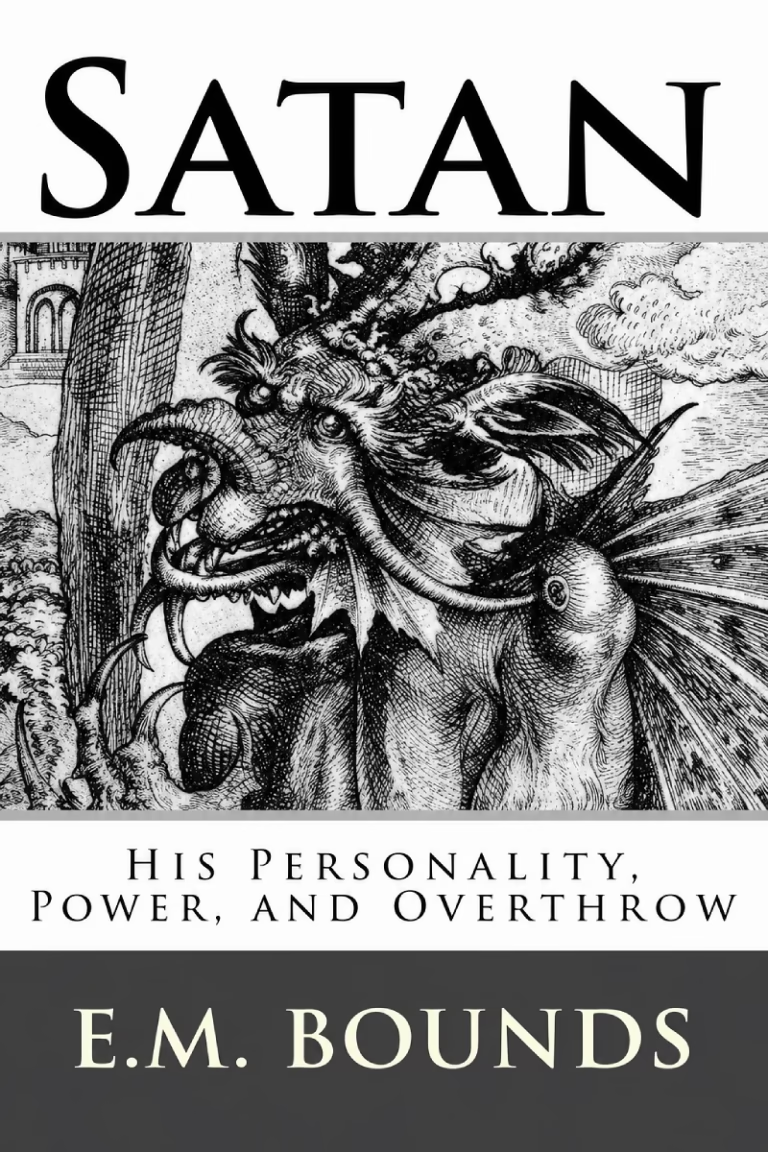

Guide to Spiritual Warfare
E. M. Bounds examines Satan as a personal spiritual adversary, tracing his power, methods, deception, opposition to the Church, influence in the world, and the vulnerable positions he exploits. The book then turns to the believer’s defense through vigilance, the armor of God, Scripture, faith, prayer, holiness, and active resistance to the devil.
Available Instantly
About This Book
Guide to Spiritual Warfare is a modernized, retitled edition of E. M. Bounds’s Satan: His Personality, Power and Overthrow. Its structure is deliberately progressive: Bounds first establishes Satan’s beginning and personality, then examines his place in the present world, his opposition to the Church, his power and methods, the vulnerable conditions he exploits, and finally the believer’s defenses. The book is therefore not a general survey of every aspect of spiritual warfare. Its central concern is to understand the personal adversary Scripture calls the devil and to learn how Christians are to recognize and resist his activity.
Bounds begins by insisting that Satan is a real personal spiritual being rather than an impersonal name for evil. Biblical descriptions of the adversary, tempter, deceiver, prince of this world, roaring lion, and angel of light are used to establish an intelligent enemy with purpose, activity, and methods. His power is treated seriously but never as equal to God. The practical reason for studying Satan is that ignorance of his character and devices leaves believers exposed to forms of attack they may not recognize.
Four chapters concentrate on Satan’s relation to the Church and the world. Bounds argues that the devil opposes the Church not only through open hostility but through quieter substitutions that displace spiritual life with merely outward, material, social, or worldly measures of success. His treatment of the world similarly emphasizes desires, values, loyalties, and systems that draw people away from God. The title “prince of this world” becomes part of a larger explanation of how spiritual opposition works through visible human conditions without removing human responsibility.
The two chapters on Satan’s power and the two on his methods develop the conflict further. Deception is a major concern. Satan may operate through disguise, suggestion, seduction, temptation, counterfeit religious appearance, or apparently attractive alternatives to God’s will. Second Corinthians contributes the image of Satan as an angel of light and Paul’s warning not to be ignorant of his devices. First Peter’s roaring lion, James’s command to resist the devil, and First John’s language of overcoming the wicked one and the world help Bounds describe both danger and resistance.
The chapters on “exposed positions” ask where Christians become especially vulnerable. Spiritual carelessness, worldliness, unguarded desire, failure to watch, weakness in practical godliness, and confidence in natural or material strength can create openings for the enemy. Bounds does not present maturity as freedom from conflict. The repeated New Testament call is to remain awake and vigilant because temptation and deception can come in changing forms.
The closing chapters turn from the adversary to defense. Ephesians 6:10–18 supplies the main warfare framework through the armor of God and the command to stand in the strength God supplies. Bounds stresses watchfulness, the Word of God, faith, prayer, holiness, forgiveness, and deliberate resistance. Watchfulness receives particular emphasis because Satan’s disguises make spiritual sleep dangerous. Prayer is part of the armor and conflict, but in this volume it serves the larger warfare theme rather than becoming the book’s governing subject.
For readers, the book addresses questions such as: Is Satan a personal being? What power does Scripture attribute to him? How does he oppose churches and individual Christians? How does deception differ from open temptation? Why can apparently religious or socially useful substitutes weaken spiritual life? What habits and conditions make a believer vulnerable? What does it mean to resist the devil? How should Christians understand the armor of God? And how do vigilance, Scripture, faith, prayer, and holy living function in spiritual conflict? Bounds’s answer is practical: believers should neither trivialize nor obsess over the enemy, but know his character and methods well enough to stand against him in the strength and provision of God.
Book Details

Reading Fit
STUDY LEVEL
Fundamental, Intermediate
STUDY SCOPE
Topical
BOOKS INCLUDED

Edition & Format
PUBLISHED
January 1, 2001
AVAILABLE FORMATS
paperback, kindle
LENGTH
162 pages

Topics Covered
You Might Also Like