

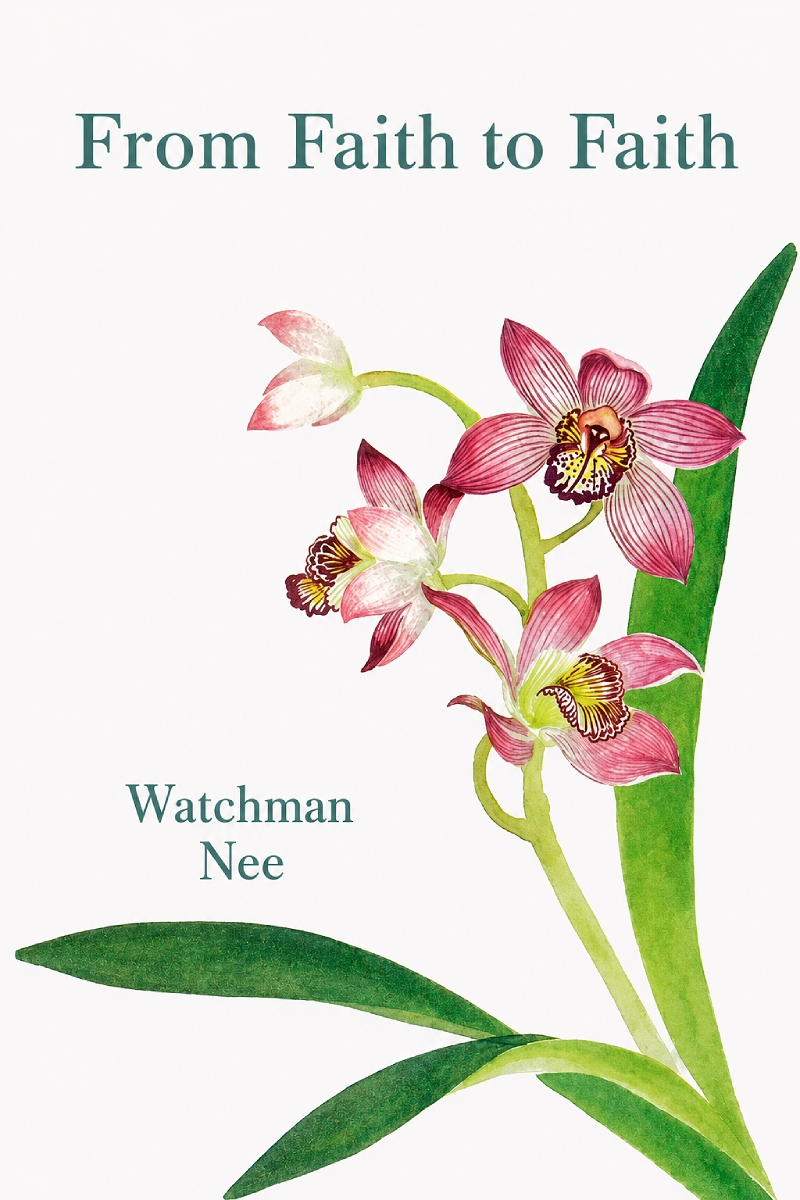
From Faith to Faith
Across nine messages, Watchman Nee develops the gospel principle “from faith to faith”: truth received rather than manufactured, confidence transferred from works and natural strength to God, worship grounded in Christ’s Blood, resurrection power under pressure, and the contrast between Lot’s defeated course and Enoch’s walk with God.
Available Instantly
About This Book
From Faith to Faith gathers nine messages by Watchman Nee around Romans 1:17 and the governing principle that the gospel is received by faith and is increasingly experienced through faith. The book is topical rather than a continuous exposition of Romans. Its chapters approach the life of faith from different angles—truth, the principle of the second, circumcision, God’s will and human willingness, the Blood and worship, the seed of God, pressure and resurrection power, Lot, and Enoch—so that faith becomes both the beginning and continuing basis of Christian experience.
“The Truth Shall Make You Free” begins from John 8:32 and distinguishes divine truth or spiritual reality from changing feelings, appearances, and self-produced experience. Faith does not create what God has made true; it recognizes and rests upon God’s reality. This gives the Christian a stable basis for freedom: experience is to come into line with truth rather than truth being judged by inward fluctuation.
“The Principle of the Second” develops a recurring biblical pattern in which God’s purpose is not secured through the natural first order but through what He sovereignly establishes. Nee uses this principle to undermine confidence in natural precedence, qualification, and works. The chapter belongs to the book’s larger argument that the gospel is based upon faith rather than human achievement.
“Circumcision” applies the same principle directly to confidence in the flesh. Drawing materially from Genesis, Galatians, and Colossians, Nee treats circumcision as a sign that the natural man cannot be the ground of acceptance with God or spiritual progress. Faith rests in what God has done in Christ and refuses to make natural strength or religious performance the basis of the Christian life.
“God’s Will and Man’s Willingness” considers how divine purpose and human response relate. Faith is not passivity. God remains the source and initiator, yet the believer must become willing, responsive, and obedient. The practical issue is cooperation with God without turning human willingness into the originating power of His work.
“Blood and Worship” places approach to God on the value of Christ’s Blood rather than the worshiper’s subjective sense of worthiness. The Blood supplies the God-given ground of access and worship. Faith looks away from fluctuating self-estimates to the redemptive work God accepts, allowing the believer to draw near on Christ’s merit rather than personal performance.
“The Seed of God” turns to the divine life received in regeneration. First John contributes the language of God’s seed abiding in the believer. Nee contrasts this God-given source with attempts to produce spiritual life from the old natural source. Christian growth depends upon recognizing, trusting, and giving place to what originates in God.
“The Power of Pressure,” the longest of the messages, develops Paul’s experience in 2 Corinthians. Overwhelming pressure brings the believer to the sentence of death in self so that confidence may be transferred to “God who raises the dead.” Nee does not treat pressure merely as trouble to escape. It becomes a setting in which natural resources are exhausted and resurrection power is known. Faith under pressure therefore means dependence on the God of resurrection rather than confidence in self.
The final two messages supply contrasting lives. Lot is a righteous man whose choices and attachment to Sodom lead to defeat and loss, showing that righteous standing does not automatically produce a victorious walk. Enoch, interpreted through Genesis and Hebrews 11, walks with God by faith and becomes a positive picture of progressive fellowship, separation unto God, and a life governed by confidence in Him.
The book addresses readers asking what it means to live by faith rather than works or feelings, how gospel truth becomes Christian experience, why God cuts off confidence in natural strength, how believers cooperate with His will, how the Blood gives access for worship, how divine life operates within, why God permits crushing pressure, and what Lot and Enoch teach about defeated and overcoming Christian living. The unifying answer is that the gospel begins in faith and the Christian walk must continue on the same ground, moving from faith to faith.
Book Details

Reading Fit
STUDY LEVEL
Intermediate
STUDY SCOPE
Topical
BOOKS INCLUDED

Edition & Format
PUBLISHED
September 23, 2009
AVAILABLE FORMATS
paperback, kindle, audiobook
LENGTH
143 pages
· 3h 7m audio

Topics Covered
You Might Also Like