

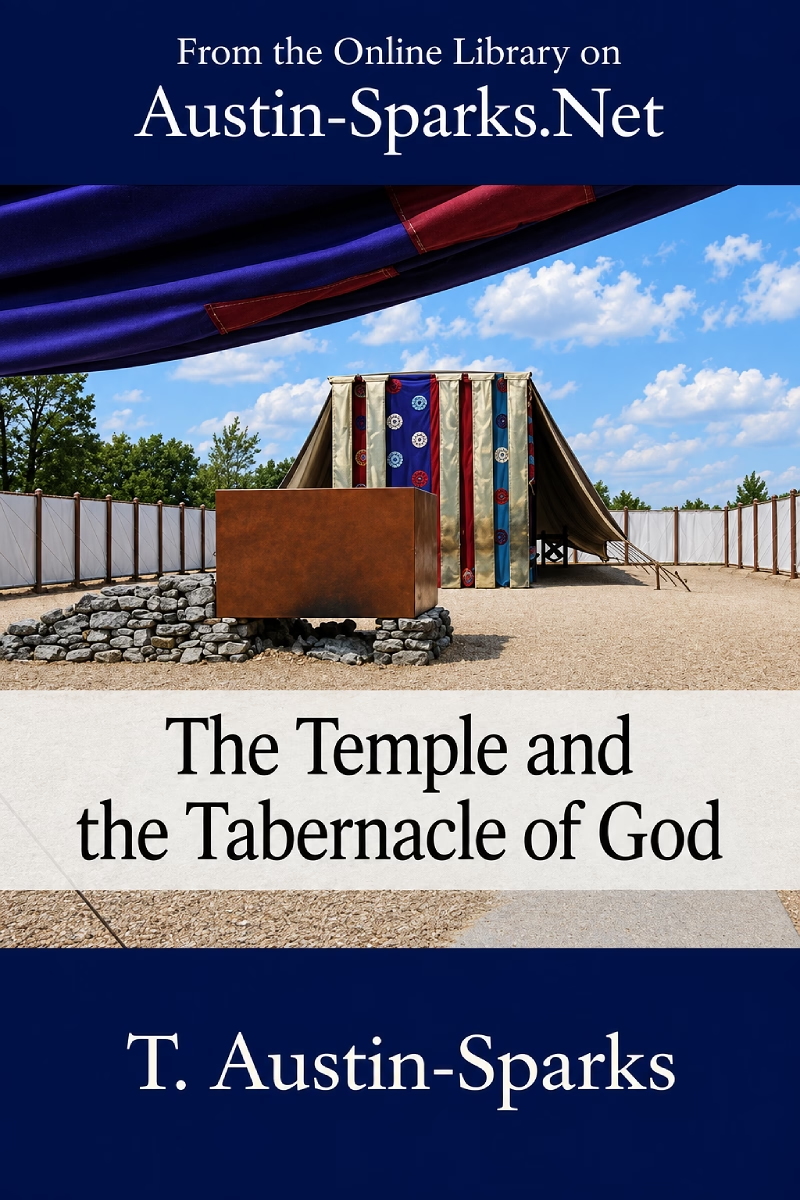
The Temple and the Tabernacle of God
T. Austin-Sparks traces God’s dwelling place from temple and tabernacle patterns to Christ and the Church as God’s living habitation. Through Ezekiel’s measure, Christ’s humility and cross, the ark and blood, and power in witness, he shows how God’s house is formed by union with Christ, mutual dependence, and a testimony governed by God rather than human strength.
Available Instantly
About This Book
The Temple and the Tabernacle of God develops one governing biblical theme: God’s desire for a dwelling place in which His own character, glory, power, and testimony can be expressed. T. Austin-Sparks follows that purpose from creation and Israel’s sanctuary history through prophetic temple imagery to Jesus Christ, the Church, and the final tabernacle of God with humanity. The temple and tabernacle are therefore not treated chiefly as architecture or ritual. They are biblical types and pictures of God’s habitation, with Christ as the true Temple and final measure and the Church as a people built together in Him.
The opening chapter establishes this continuity through passages including Genesis 1:26, 1 Chronicles 22:5, Ezekiel 40–43, Haggai 2, John 2:19–21, Ephesians 2:21–22, 1 Corinthians 3:16–17, and Revelation 21:3. Ezekiel’s visionary temple supplies the principle of divine measurement: God has an exact thought for His house, and what exists among His people must be measured by that thought. Haggai’s latter glory points beyond the earlier outward house, while John 2 identifies Jesus Himself as the Temple. Sparks presents Christ as the complete personal embodiment of what God requires in His dwelling.
Revelation 3:14–22 sharpens that standard through Christ as the Amen, the faithful and true Witness. Laodicean self-satisfaction, self-confidence, and self-sufficiency are exposed when measured against Him. The practical question is therefore not whether Christians possess correct teaching about God’s house, but whether the spiritual character of Christ governs the people who claim to be that house.
Humility is the book’s major practical law of God’s habitation. Drawing especially on the meekness of Christ and Paul’s experience, Sparks contrasts humility, dependence, self-emptying, and God-centeredness with pride, independence, possessiveness, and self-sufficiency. A people who are built together as God’s dwelling cannot live as spiritually independent units. The Cross of Christ works against the natural strength and self-interest that fragment corporate life, making room for fellowship, mutual dependence, and the government of Christ.
The chapter on power in witness develops this same principle through Philippians 2:5–11, Ephesians 1:20–23, and Acts 4. Spiritual power is not presented as an impersonal endowment or the product of forceful organization. It belongs to the exalted Christ and is expressed through a Church that stands in living union with Him. The Name of Jesus represents His authority, and His exaltation is inseparable from the humility and obedience of the Cross. Christian witness therefore carries weight as God’s people correspond to the spiritual basis on which Christ Himself was exalted.
The final chapter turns to the ark of the covenant and 1 Chronicles 13–15. The ark is treated as a type of Christ and of the testimony of Jesus entrusted to the Church. Its mercy-seat and the blood of atonement bring the blood of Christ into the book’s teaching on how God meets His people. David’s first attempt to transport the ark on a new cart becomes a warning against trying to carry divine testimony by natural methods, machinery, or merely human organization. God’s order is living and spiritual: His testimony is borne by people who are themselves in fellowship and union with Him.
This makes the book especially relevant to questions about what the temple and tabernacle mean spiritually, how Old Testament sanctuary patterns are fulfilled in Christ, why believers corporately are called God’s temple, why humility and dependence matter to Church life, how the Cross deals with pride and self-sufficiency, where spiritual power in witness comes from, what the ark and blood signify, and why Christian ministry cannot substitute human methods for living correspondence with God.
The line finally reaches Revelation, where God’s tabernacle is with humanity. Across the book, biblical continuity, typology, God’s eternal purpose, the glory of God, the Holy Spirit, union with Christ, and the corporate Church converge in one concern: a living habitation that expresses Christ rather than merely reproducing outward religious forms.
Book Details

Reading Fit
STUDY LEVEL
Advanced, Intermediate
STUDY SCOPE
Entire Bible, Topical
BOOKS INCLUDED

Edition & Format
PUBLISHED
October 1, 2012
AVAILABLE FORMATS
kindle
LENGTH
41 pages

Topics Covered
You Might Also Like