

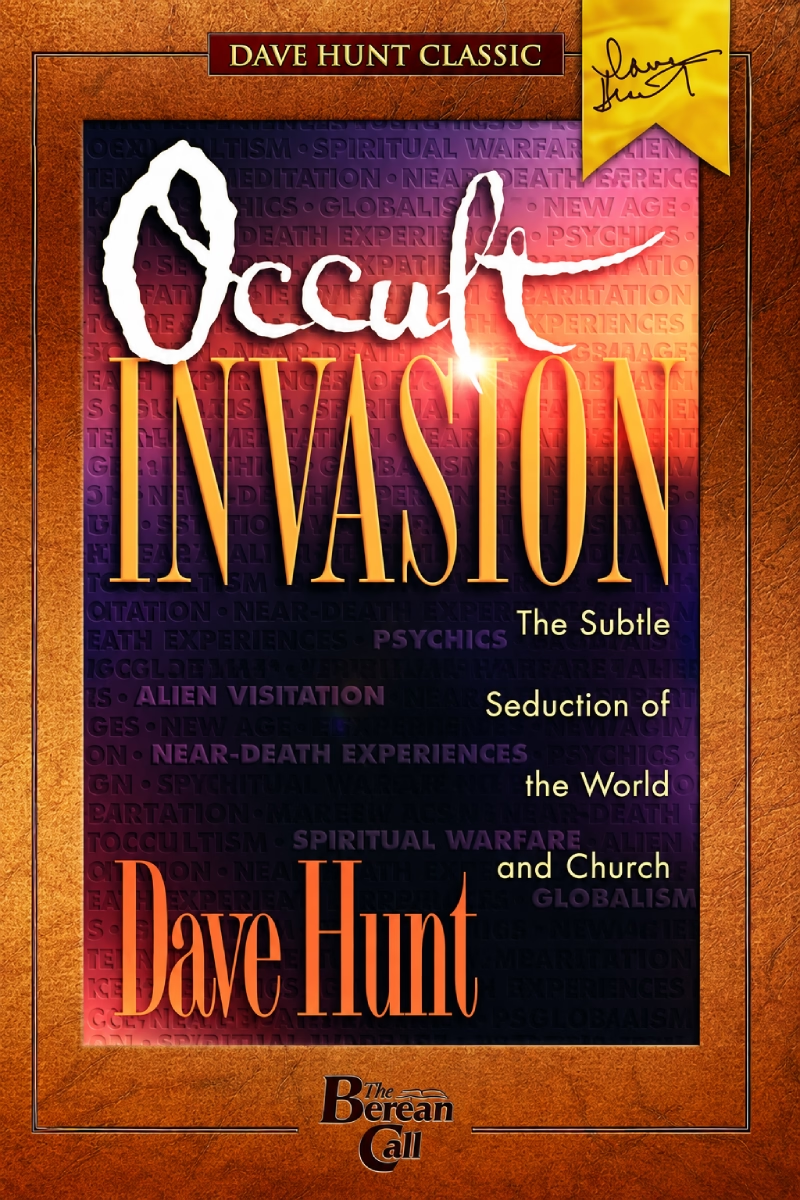
Occult Invasion
Dave Hunt traces occultism’s spread through psychic phenomena, Eastern mysticism, New Age spirituality, psychology, alternative healing, and paranormal experiences into modern culture and the church. He compares these influences with Scripture, emphasizing spiritual deception, biblical discernment, spiritual warfare, and end-times religious convergence.
Available Instantly
About This Book
Occult Invasion is Dave Hunt’s broad study of how occult beliefs, techniques, and supernatural claims move from explicitly occult settings into ordinary culture and into professing Christianity. Its governing concern is not merely to catalogue witchcraft or esoteric practices, but to show how occult ideas can appear under respectable, scientific, therapeutic, religious, or Christian language. Hunt repeatedly asks what spiritual source lies behind apparently beneficial or impressive experiences and argues that supernatural power, enlightenment, healing, guidance, or miracles must be tested rather than accepted because they seem positive.
The book begins by connecting modern occult openness with the decline of materialism and with evolutionary and spiritual ideas about humanity’s ascent toward higher states. Genesis 1–3 becomes important to this argument because Hunt contrasts biblical creation and the fall with concepts of evolutionary godhood and the serpent’s promise that humanity can become “as gods.” He then defines occultism in terms of hidden spiritual knowledge and power, and surveys psychic research, remote viewing, parapsychology, spirit communication, possession, altered states of consciousness, drugs, visualization, and other attempts to contact or manipulate a nonphysical realm. Deuteronomy 13 and 18 provide recurring biblical warnings that signs, wonders, divination, and contact with spirits are not validated merely by supernatural results.
A large middle section traces occult concepts through native and nature religions, shamanism, ecology, Eastern mysticism, New Age spirituality, holistic medicine, twelve-step spirituality, youth culture, and the human-potential search for inner power. Hunt also considers UFO and extraterrestrial claims, near-death experiences, apparitions, angels, ghosts, and Marian appearances as part of the larger question of whether paranormal experiences can involve deceptive spiritual intelligences. Second Corinthians 11, especially Paul’s warning that Satan can appear as an angel of light, becomes a recurring interpretive principle for experiences that present themselves as benevolent, enlightened, or religious.
The later chapters focus increasingly on the church. Hunt examines the relationship between occult ideas and psychology, including the adoption of psychological methods within Christian counseling, and contrasts reliance on inner guidance, visualization, hypnosis, or therapeutic theories with the sufficiency of Scripture. He then addresses charismatic and evangelical supernaturalism, false prophecy, signs and wonders, revival claims, positive-confession concepts of spiritual power, and the danger of judging an experience by its emotional or miraculous effect rather than by biblical truth. Matthew 7 and Matthew 24 are especially important to this discussion because Hunt develops Christ’s warnings about religious deception, false prophets, and impressive signs that can mislead.
Spiritual warfare receives a substantial biblical comparison. Hunt evaluates teachings about territorial spirits, spiritual mapping, binding demonic powers, and related strategies against Ephesians 6, Acts 16–17, and the New Testament pattern. His emphasis is that the believer’s warfare is centered on standing against the devil’s deception, believing God’s Word, holding the shield of faith, proclaiming the gospel, and resisting lies rather than attempting to control unseen territorial powers through spiritual techniques.
The final chapters connect the occult invasion with end-times religious deception. Hunt treats ecumenical convergence, a universal spirituality, the Antichrist, false signs and wonders, and the prospect of a coming world religion. Second Thessalonians 2 and Revelation 13 contribute substantially to this prophetic framework, alongside Matthew 24. The book therefore serves readers asking what occultism is, how occult ideas become culturally respectable, whether paranormal or mystical experiences are spiritually safe, how occult concepts can enter Christian practice, how to distinguish the Holy Spirit from counterfeit spiritual power, what biblical spiritual warfare involves, and how religious deception may relate to Bible prophecy and the last days.
Book Details

Reading Fit
STUDY LEVEL
Advanced, Intermediate
STUDY SCOPE
Topical
BOOKS INCLUDED

Edition & Format
PUBLISHED
December 31, 2010
AVAILABLE FORMATS
paperback
LENGTH
648 pages

Topics Covered
You Might Also Like