
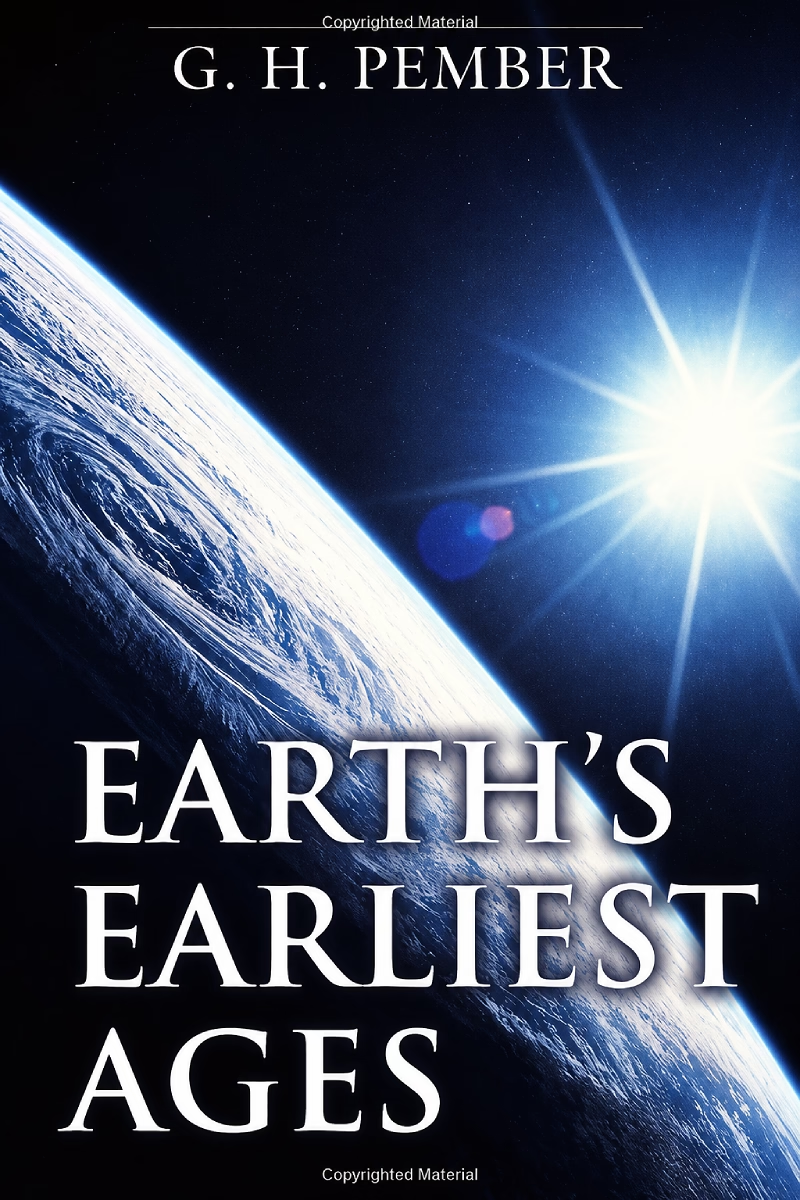
Earth’s Earliest Ages
G. H. Pember reads Genesis 1–6 as literal history, arguing for a pre-Adamic world and an interval before the six-day restoration, then traces the days of Noah into fallen angels, spiritualism, Theosophy, Buddhism, occult power, and end-time deception. Early Genesis becomes his lens for both ancient origins and the spiritual conditions he expects before Christ’s return.
Available Instantly
About This Book
Earth’s Earliest Ages is G. H. Pember’s combined study of Genesis 1–6 and the return of forbidden supernaturalism in the last days. Pember states a twofold purpose: to address geological difficulties connected with the opening of Genesis and to show that the characteristics of the days of Noah are reappearing before the coming of the Son of Man. The result is both an advanced early-Genesis exposition and an extended investigation of spiritualism, occult religion, fallen angels, and prophetic deception.
Pember begins with biblical interpretation and the language of Genesis. He distinguishes the original creation of Genesis 1:1 from the earth’s condition in Genesis 1:2 and argues for an interval between them. Within this creation-restoration framework he allows for geological ages and a pre-Adamic order while retaining six literal days for the later restoration and furnishing of the earth. His discussion of the interval is tied to the fall of Satan and an angelic rebellion that he believes preceded Adam. Readers asking what may have happened between Genesis 1:1 and 1:2, how an old earth might be reconciled with literal creation days, or what is meant by a pre-Adamic world receive sustained treatment.
The exposition then follows the creation and fall of humanity, Cain and Abel, antediluvian civilization, and the increasing corruption before the Flood. Pember gives substantial attention to the constitution of man as spirit, soul, and body and to the disorder introduced through the fall. Genesis 6 becomes a major turning point. He interprets the “sons of God” as angelic beings and connects the Nephilim with an unlawful intrusion of fallen angels into human affairs. This interpretation joins his study of the earliest ages to his later concern with supernatural powers.
The days of Noah are one of the book’s governing prophetic patterns. Pember develops Christ’s words in Matthew 24:37–39—“as the days of Noah were”—as a warrant for comparing the antediluvian world with conditions preceding the return of Christ. The Flood narrative is therefore not treated only as ancient history. It becomes a biblical framework for examining moral corruption, departure from God, supernatural intrusion, and end-time deception.
A large second movement of the book investigates spiritualism and spirit mediumship. Pember surveys biblical prohibitions and examples involving familiar spirits, necromancy, divination, sorcery, and demonic activity, then compares them with nineteenth-century séances, mediums, spirit communications, mesmerism, and supernatural manifestations. He treats the conflict as genuine spiritual warfare rather than merely as fraud or superstition and emphasizes the need for spiritual discernment when supernatural experiences claim religious authority.
Pember extends this analysis to Theosophy and Buddhism, examining reincarnation, karma, esoteric wisdom, spiritual evolution, ascetic disciplines, hidden spiritual intelligences, and related religious claims. He regards these movements as allied forms of spiritual deception and connects them with New Testament warnings concerning deceiving spirits and doctrines of demons, especially 1 Timothy 4. Daniel’s portrayal of conflict among unseen powers, Ephesians 6 on principalities and powers, and Revelation’s presentation of Satanic conflict materially contribute to this framework.
The book addresses readers asking about the gap between Genesis 1:1 and 1:2, geological ages, literal creation days, the pre-Adamic earth, Satan’s fall, the sons of God and Nephilim, the days of Noah, spirit-soul-body distinctions, mediums and spirit communication, Theosophy, Buddhism, occult manifestations, and the relationship between supernatural deception and the second coming. Its unifying argument is that the earliest chapters of Genesis disclose patterns of creation, rebellion, judgment, and supernatural corruption that illuminate both the ancient world and the prophetic last days.
Book Details

Reading Fit
STUDY LEVEL
Advanced
STUDY SCOPE
Individual Book, Old Testament, Topical
BOOKS INCLUDED

Edition & Format
PUBLISHED
June 30, 1975
AVAILABLE FORMATS
paperback, hardcover, kindle
LENGTH
336 pages

Topics Covered
You Might Also Like