

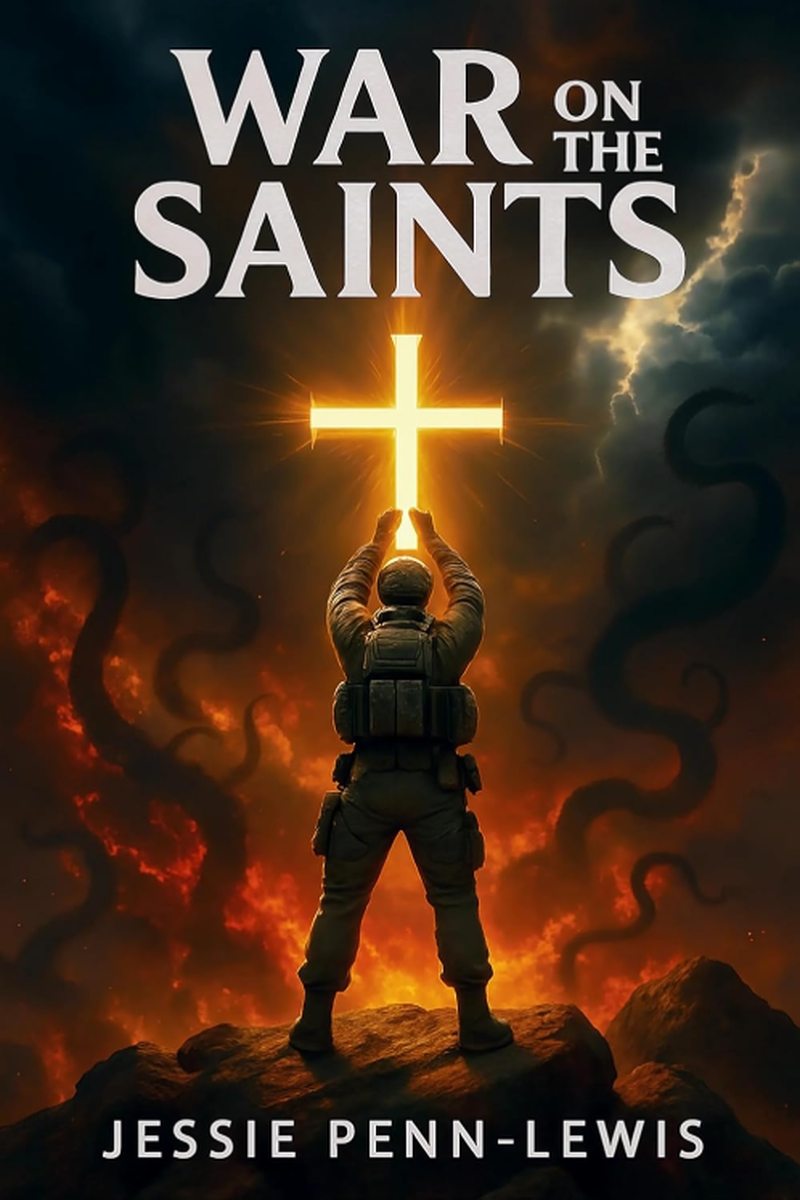
War On The Saints – Illustrated
Jessie Penn-Lewis and Evan Roberts examine how believers can be deceived by evil spirits, how passivity and surrendered “ground” can lead to spiritual bondage, and how freedom is recovered. The book distinguishes divine, human, and counterfeit workings and trains readers to exercise mind, will, spirit, prayer, Scripture, and resistance in spiritual conflict.
Available Instantly
About This Book
War on the Saints is Jessie Penn-Lewis’s and Evan Roberts’s extended study of spiritual deception, evil spirits, passivity, counterfeit spiritual experience, demonic interference, deliverance, and continuing warfare against the powers of darkness. Its argument progresses from the biblical fact of deception to the ways believers may unknowingly give opportunity to evil spirits, then to discernment, recovery of the will, removal of spiritual ground, freedom from interference, and active conflict from a restored position.
The opening chapters establish deception as the foundational problem. Genesis 3 supplies the first biblical pattern in the serpent’s deception of Eve, while First Timothy 4:1 warns of deceiving spirits and teachings associated with demonic activity. Penn-Lewis distinguishes Satan from the wider confederacy of wicked spirits operating under his authority, and Ephesians contributes the language of principalities, powers, and spiritual forces of wickedness. The central question is how sincere believers can be misled while believing that they are responding to God.
Passivity is one of the book’s governing practical concepts. Penn-Lewis argues that a mistaken idea of surrender can lead a Christian to stop actively using faculties that God still intends the person to exercise. Passivity may affect mind, judgment, memory, will, body, or human spirit. The Holy Spirit is not presented as replacing human personality or responsibility; genuine cooperation with God involves an awakened, responsive person whose faculties remain actively available to Him.
Closely related is the book’s distinctive concept of “ground.” Ground is a condition, belief, practice, or surrendered area that gives evil spirits opportunity to work. The book connects the degree of interference with the degree of ground and examines how such ground is recognized, refused, and removed. This framework allows Penn-Lewis to discuss demonic possession and oppression in degrees rather than restricting the subject to dramatic outward manifestations.
The chapters on counterfeits of the divine examine experiences that may be accepted as from God merely because they are supernatural or religious. Voices, impressions, apparent divine presence, spiritual messages, physical sensations, visions, and guidance are tested by source rather than appearance. Second Corinthians 11:13–15 provides the controlling image of Satan appearing as an angel of light. Counterfeit light is therefore treated as a major form of spiritual deception, and discernment becomes essential for believers who sincerely desire the work of the Holy Spirit.
The path to freedom is developed through truth, the Cross of Christ, active rejection of deception, recovery of the will, removal of ground, and resistance to evil spirits. Deliverance is not portrayed as a simple movement from demonic control into passivity before God. The believer must resume proper use of mind and will, reject lies, stand upon truth, and cooperate intelligently with God. The Cross supplies the objective basis for freedom, while the believer’s active response to truth is part of the practical recovery.
The human will and mind receive sustained attention because deception often operates through accepted thoughts, impressions, or assumptions. The book distinguishes spirit, soul, mind, will, and body in order to describe how different faculties may become passive or influenced. This makes flesh, soul, and spirit an important supporting framework for discernment and recovery rather than an abstract study of human psychology.
The later chapters move into direct warfare. Ephesians 6:10–18 supplies the armor, resistance, prayer, and conflict with spiritual powers. Revelation 12–13 broadens the picture to satanic opposition and deceptive supernatural power. The concluding treatment of revival insists that genuine movements of the Holy Spirit require heightened discernment, because spiritual manifestations must be tested rather than accepted simply because they occur in a religious awakening.
War on the Saints addresses readers asking how Christians can be spiritually deceived, what passivity means, what “ground” given to evil spirits is, how counterfeit guidance is recognized, how demonic interference can gain control, how the will and mind function in recovery, what the Cross contributes to deliverance, and how believers resist evil powers while remaining open to the genuine work of the Holy Spirit.
Book Details

Reading Fit
STUDY LEVEL
Advanced, Intermediate
STUDY SCOPE
Topical
BOOKS INCLUDED

Edition & Format
PUBLISHED
August 21, 2026
AVAILABLE FORMATS
paperback, hardcover, kindle
LENGTH
393 pages

Topics Covered
You Might Also Like