
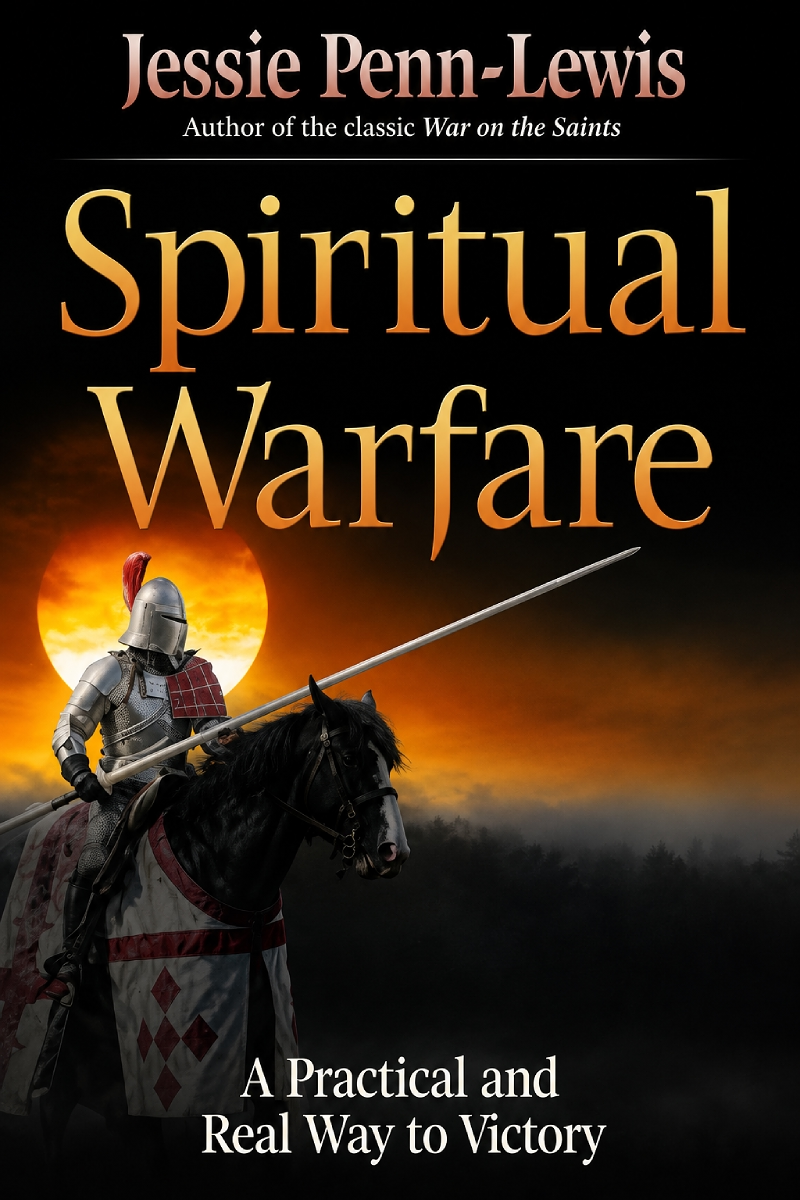
Spiritual Warfare
Jessie Penn-Lewis presents spiritual warfare as conflict with unseen powers fought from the believer’s union with Christ and the finished work of Calvary. Using Ephesians 6 with Romans 6, she develops prayer warfare, active cooperation with the Holy Spirit, soul-and-spirit discernment, resistance to deception and passivity, and practical control of mind, will, and imagination.
Available Instantly
About This Book
Spiritual Warfare is Jessie Penn-Lewis’s compact practical study of the believer’s conflict with unseen spiritual powers. Ephesians 6:10–18 supplies the governing picture: Christians do not wrestle against flesh and blood but against principalities and powers, and they stand in the whole armor of God. Penn-Lewis does not treat Ephesians 6 as an isolated technique. She argues that the believer reaches this sphere of conflict through the spiritual ground developed in Romans 6 and Ephesians 1–5—death with Christ, resurrection with Christ, and union with the enthroned Lord.
Prayer in spiritual warfare is one of the book’s dominant subjects. Penn-Lewis calls it “prayer warfare”: holding the victory of Christ’s finished work against the powers of darkness until opposition is broken. The emphasis is on persistent intercession for people, places, gospel work, and situations without turning the conflict against human beings themselves. Ephesians 6:18, Romans 6, Galatians 2:20, and Ephesians 2:6 are used to connect persevering prayer with the believer’s position in Christ and the victory of Calvary.
The Cross of Christ is therefore both the foundation of the Christian’s personal life and the ground of resistance to Satan. Romans 6 receives substantial practical development. Penn-Lewis distinguishes forgiveness from the believer’s identification with Christ in death, teaching that the old Adam was crucified with Him and that the Christian is to reckon this true in daily life. This provides a basis for overcoming sin while also distinguishing conflict with sin from conflict with spiritual enemies. Her closing discussion of “standing on Calvary” returns to the same finished work as the believer’s ground for resisting the devil.
Several chapters address how the Holy Spirit works through an active believer rather than replacing human faculties. Ephesians 5:18 leads into teaching on being filled in spirit, the regenerated human spirit, and cooperation with the Holy Spirit. Hebrews 4:12 becomes the key text for discerning between soul and spirit. Penn-Lewis distinguishes the human spirit from the intellectual and emotional soul-life and argues that the Word of God exposes what is soulish and what is spiritual.
This distinction becomes crucial in the book’s treatment of spiritual deception. Penn-Lewis warns that supernatural experience should not be accepted merely because it appears spiritual. Counterfeit experiences and counterfeit guidance can operate through the soulish or sense life, so believers need spiritual discernment, doctrinal testing, and an alert mind. The book asks how a Christian can distinguish divine leading from deceptive impressions, how sincere believers can be misled, and why apparent spiritual manifestations must be tested rather than accepted automatically.
The chapters on the will, mind, passivity, and imagination make the warfare intensely practical. Penn-Lewis insists that surrender to God is not mental or volitional inactivity. Her “law of passivity” describes the danger of ceasing to use the will, mind, or other faculties while expecting God to act instead of the believer. In contrast, the Holy Spirit works with an intelligent, active coworker. The mind is to remain clear and available to receive light, while the will deliberately chooses God’s will and refuses the enemy. A lengthy chapter on imagination treats intrusive mental pictures, suspicions, fears, and uncontrolled imagery as an arena requiring recognition, refusal, truth, and disciplined thought.
Spiritual Warfare therefore addresses readers asking how to pray in spiritual conflict, what the armor of God means in practice, how Romans 6 relates to warfare, how to resist the devil without fighting people, how to recognize counterfeit spiritual experience, how soul and spirit differ, why passivity can produce deception or powerlessness, and how mind, will, and imagination should function under the Holy Spirit. Its distinctive emphasis is that victory in spiritual conflict rests on Christ’s finished work while requiring alert discernment, active obedience, and sustained prayer.
Book Details

Reading Fit
STUDY LEVEL
Advanced, Intermediate
STUDY SCOPE
Topical
BOOKS INCLUDED

Edition & Format
PUBLISHED
January 1, 1991
AVAILABLE FORMATS
paperback, kindle
LENGTH
64 pages

Topics Covered
You Might Also Like