

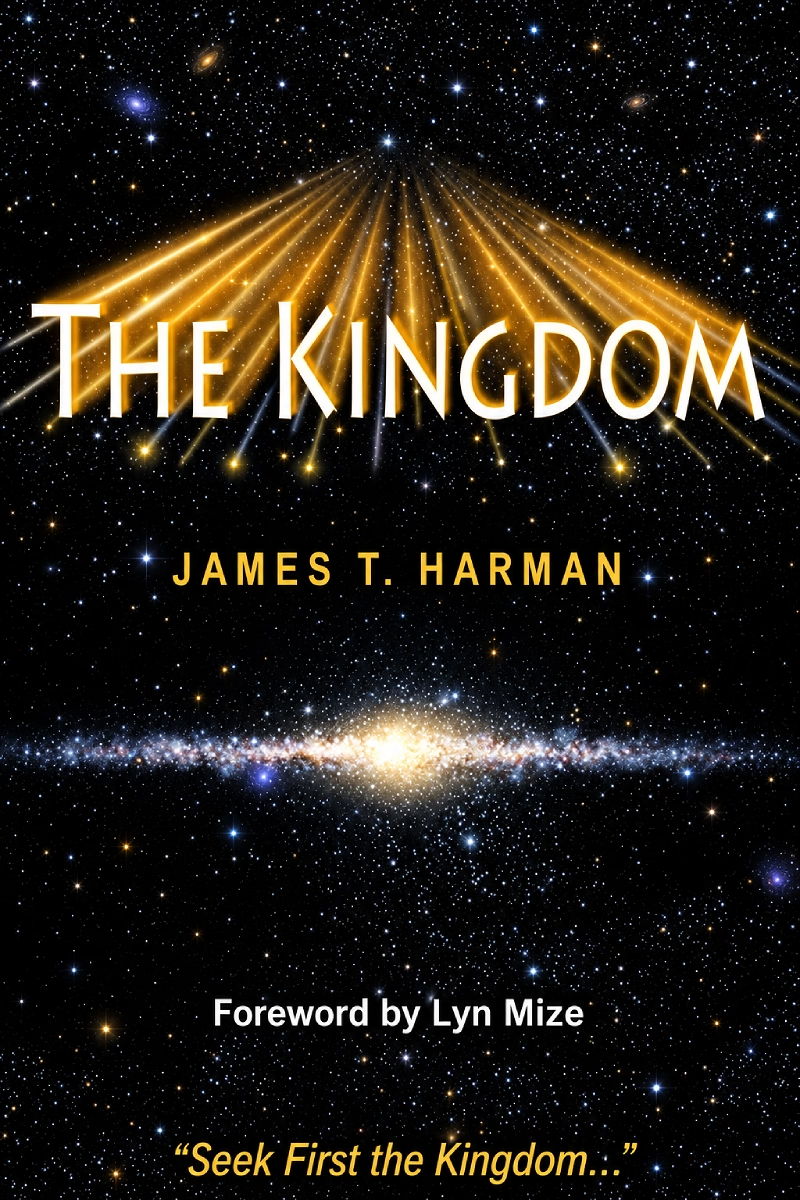
The Kingdom
James T. Harman distinguishes salvation freely received by grace from the believer’s future reward according to works. Centered on the coming millennial Kingdom, the book develops the Judgment Seat of Christ, salvation of the soul, kingdom entrance, overcomers, outer darkness, Gehenna, the Book of Life, and the call to live faithfully in view of reigning with Christ.
Available Instantly
About This Book
The Kingdom is James T. Harman’s topical study of the believer’s relationship to the coming millennial Kingdom and the preparation he believes Scripture requires for entering and reigning in it. Its governing distinction is between eternal salvation, received freely by grace through faith in Jesus Christ, and future reward, which Harman relates to a believer’s works and faithfulness after conversion. From that distinction he develops the Judgment Seat of Christ, salvation of the soul, kingdom entrance, loss and reward, overcomers, and the practical call to seek first the Kingdom.
Chapter 1 establishes grace and works from Ephesians 2:8–10. Harman repeatedly insists that works do not earn or preserve the believer’s initial salvation. Good works matter because believers will later give account to Christ. Revelation 22:12 and other reward passages are used to connect Christ’s return with recompense according to works. This grace-and-reward distinction becomes the interpretive foundation for the warning passages treated later in the book.
The Judgment Seat of Christ receives a full chapter and remains important throughout. Second Corinthians 5:10 is the major text: all believers must appear before Christ to receive according to what they have done. First Corinthians 3 and 9 contribute the imagery of works tested by fire, reward and loss, running a race, winning a prize, and receiving crowns. Harman treats Christian reward as consequential rather than decorative, because he connects it with participation in Christ’s coming rule.
The next major theme is the salvation of the soul. Using 1 Thessalonians 5:23, 1 Peter 1:9, Matthew 10, Hebrews 12, and related passages, Harman distinguishes spirit, soul, and body and argues that the believer’s soul must be saved through a life in which the Spirit governs rather than the flesh. Self-denial, taking up the cross, obedience, and overcoming are connected with this continuing salvation. The book repeatedly links salvation of the soul with the believer’s evaluation at the Judgment Seat and with entrance into the Kingdom.
Harman identifies the Kingdom under discussion as the future thousand-year reign of Christ. Matthew 6:33 becomes a practical command: Christians are to seek the Kingdom as a first priority. He distinguishes being born again and seeing the Kingdom from qualifying to enter and share its reward. John 3:3–5, the Sermon on the Mount, and other sayings of Jesus are brought into this argument. Matthew 5–7 receives recurring use, especially in relation to righteousness, faithful obedience, and kingdom entrance.
Several chapters examine warning passages that Harman applies to believers. Outer darkness is developed from Matthew 8, Matthew 22, and Matthew 25, especially the parables and sayings involving faithful and unfaithful servants. A chapter on biblical terms translated “hell” distinguishes Sheol, Hades, Tartarus, and Gehenna, with Gehenna receiving the greatest attention in relation to Jesus’ warnings. Separate chapters then examine the second death and the Book of Life through Revelation. These themes are tied back to accountability, loss, and the overcomer promises.
The chapter on overcomers concentrates especially on Revelation 2–3. Harman describes overcoming the world, the flesh, and the devil and connects the promised rewards of the seven churches with the believer’s future inheritance. He presents the Cross, the Word of God, and the Holy Spirit as means by which Christians learn to overcome. The emphasis then turns positively toward entrance into the Kingdom, crowns and prizes, faithfulness under testing, and the prospect of ruling and reigning with Christ.
The book’s appendices broaden the eschatological setting. One urges believers to watch for Jesus and live ready for His return. Another examines the sign of Christ’s coming through Matthew 24 and Luke 21. These sections reinforce the book’s future orientation without displacing its main concern: how present Christian conduct relates to future kingdom reward.
The Kingdom therefore addresses readers asking what the difference is between salvation and reward, what happens at the Judgment Seat of Christ, what “salvation of the soul” means, whether every Christian receives the same kingdom reward, what outer darkness and Gehenna mean in warning passages, who the overcomers are, why Christians are told to seek the Kingdom, and what it means to run for a prize and reign with Christ. Its practical burden is that grace establishes the believer’s salvation, while present faithfulness prepares the believer for Christ’s evaluation and the coming Kingdom.
Book Details

Reading Fit
STUDY LEVEL
Advanced, Intermediate
STUDY SCOPE
Topical
BOOKS INCLUDED

Edition & Format
PUBLISHED
April 5, 2011
AVAILABLE FORMATS
paperback, kindle
LENGTH
107 pages

Topics Covered
You Might Also Like