

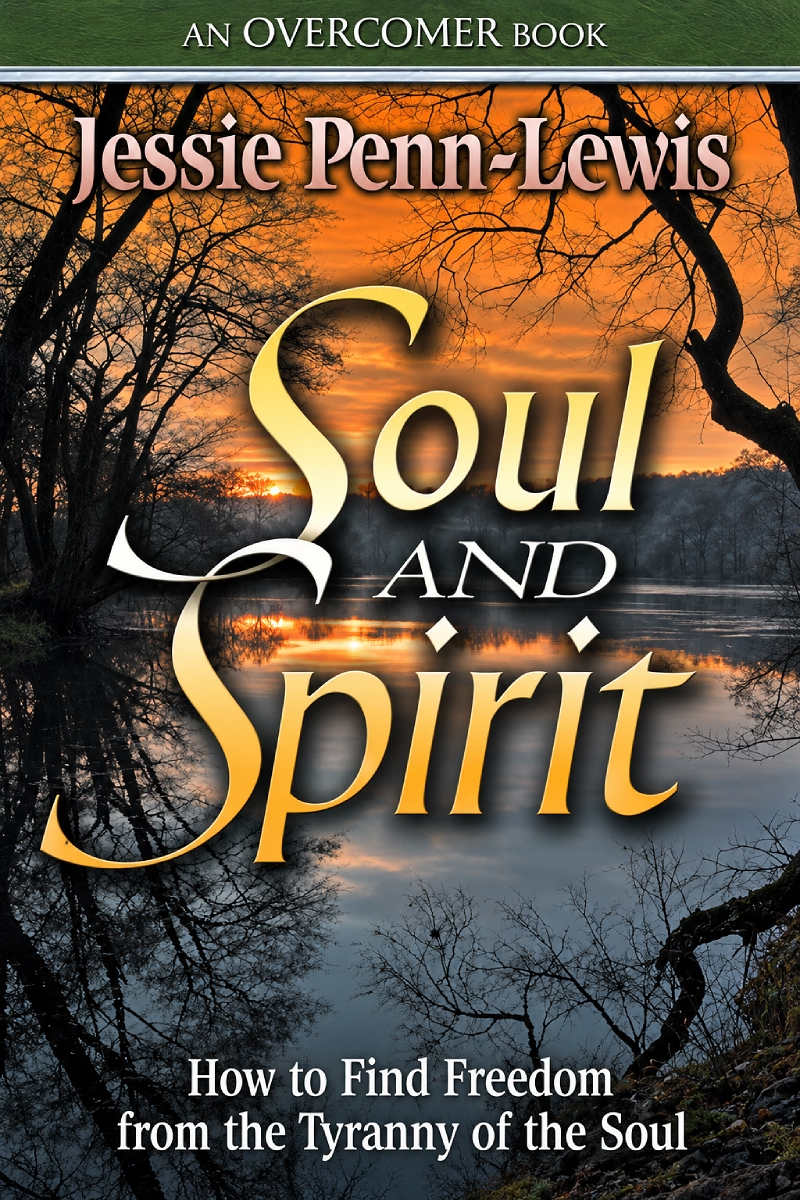
Soul and Spirit
Jessie Penn-Lewis examines the biblical distinction between spirit, soul, and body and how the Cross brings the soul-life under the government of the regenerated spirit and the Holy Spirit. She contrasts soul-force with spirit-force and develops spiritual discernment for recognizing psychic, deceptive, and counterfeit experiences while growing into a mature Spirit-governed life.
Available Instantly
About This Book
Soul and Spirit is Jessie Penn-Lewis’s sustained study of the biblical distinction between the human spirit, soul, and body and of the transition from a carnal or soulish Christian life to one governed by the regenerated spirit in cooperation with the Holy Spirit. Hebrews 4:12 and 1 Thessalonians 5:23 supply the book’s governing biblical language. Penn-Lewis uses their distinction between soul and spirit to address spiritual growth, the work of the Cross, discernment, and the danger of confusing natural or psychic activity with genuine spiritual life.
The book first establishes the functions and relationships of spirit, soul, and body. Genesis 2–3, 1 Corinthians 2, and 1 Thessalonians 5 contribute to Penn-Lewis’s account of humanity’s constitution, the Fall, and the difference between the natural or soulish person and the person whose spirit has been made alive toward God. The soul includes faculties such as mind, emotion, and will, but the problem is not that these faculties exist. The problem is their independent government when the human spirit should be under the Holy Spirit’s rule.
Penn-Lewis distinguishes regeneration from spiritual maturity. A Christian may truly possess new life while still living largely from natural strength, soulish impulse, fleshly desire, self-interest, or the independent action of the mind and emotions. Romans 6 and Galatians 5 are important because her answer is not stronger self-control by the natural life. The Cross must become experiential. The believer reckons on death with Christ so that the old self-governing life loses its mastery and the Spirit can gain practical government.
Hebrews 4:12 receives sustained treatment as the passage describing the dividing of soul and spirit by the living Word of God. Penn-Lewis presents this division as necessary for spiritual discernment. The believer must learn to recognize what originates in the soul and what originates in the spirit. The Word exposes motives and sources that outward appearance alone cannot distinguish. The Cross and the Word therefore work together in freeing the human spirit from domination by the soul-life.
The positive goal is the spiritual Christian. The human spirit, joined to the Lord and energized by the Holy Spirit, becomes the governing source, while soul and body become instruments through which the life of Christ can be expressed. Romans, Galatians, Ephesians, John, and 1 John are used to connect this Spirit-governed life with love, light, maturity, unity, and practical transformation. Spiritual maturity is not the destruction of personality but the right ordering of the whole person under God.
A substantial later section develops “soul-force” and “spirit-force.” Penn-Lewis distinguishes power arising from the natural or fleshly life from power that originates in the Holy Spirit through the human spirit. Psychic or psychical phenomena, intense mental or emotional power, and apparently supernatural experiences are not treated as automatically spiritual. Their source must be discerned.
This distinction leads directly into spiritual deception, counterfeit light, the occult, and spiritual warfare. Penn-Lewis warns that powers of darkness can work in the soul-realm and imitate genuine spiritual activity through false impressions, counterfeit illumination, deceptive guidance, and psychic manifestations. Ephesians 6 contributes to her description of increasingly subtle spiritual conflict. Discernment requires testing the source and character of spiritual experiences rather than accepting them because they feel powerful, supernatural, or religious.
The book therefore answers practical questions such as: What is the difference between soul and spirit? What does Hebrews 4:12 mean by dividing them? Why can a regenerated Christian still live from natural or soulish power? How does the Cross deal with the soul-life? What is soul-force? How does the Holy Spirit govern the human spirit? How can a believer distinguish genuine spiritual life from psychic or counterfeit experiences? And how does spiritual maturity develop as the whole person comes under the life and rule of the Spirit?
Book Details

Reading Fit
STUDY LEVEL
Advanced, Intermediate
STUDY SCOPE
Topical
BOOKS INCLUDED

Edition & Format
PUBLISHED
March 12, 2013
AVAILABLE FORMATS
paperback, kindle
LENGTH
150 pages

Topics Covered
You Might Also Like