
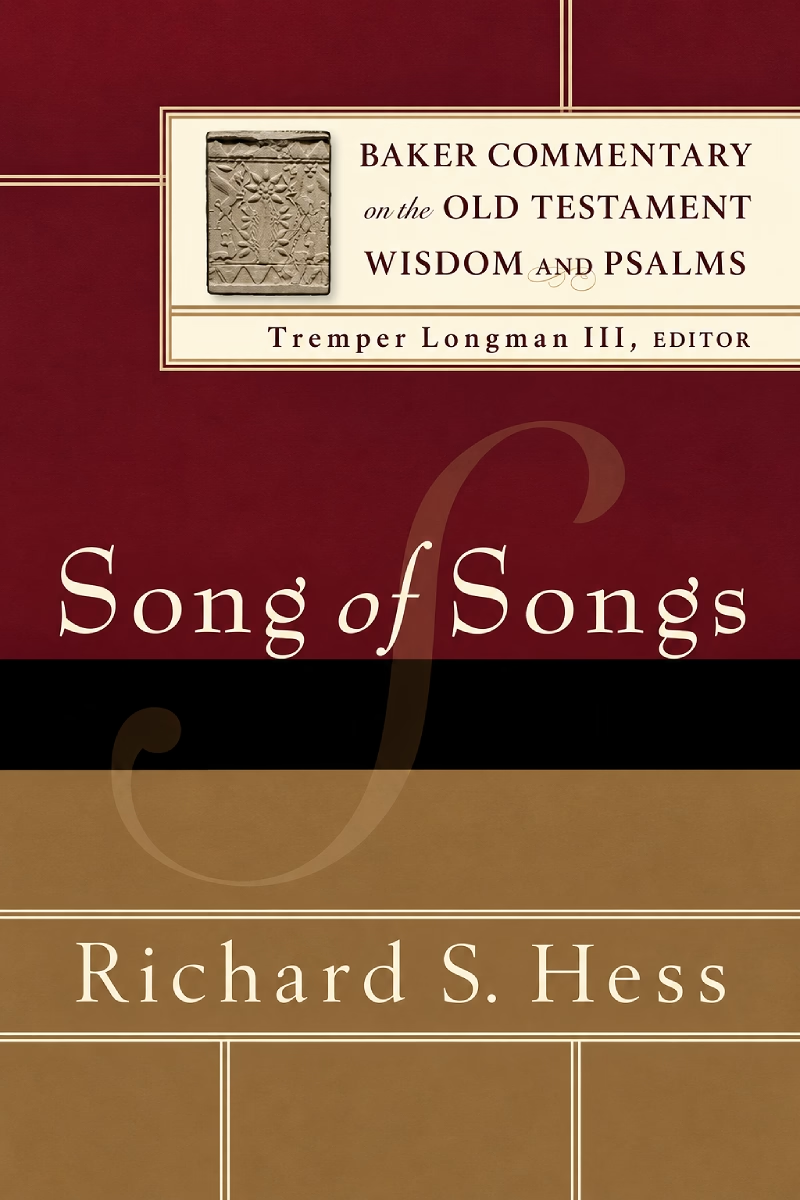
Song of Songs
Richard S. Hess offers a detailed, accessible commentary on Song of Songs as Scripture that celebrates the beauty, desire, joy, and commitment of human erotic love. Working from the Hebrew poetry and its ancient setting, he follows the lovers’ voices and imagery while drawing out the Song’s theological significance, including love as God’s gift and its resonance with God’s love for his people.
Available Instantly
About This Book
Richard S. Hess’s Song of Songs is a sustained exegetical and theological commentary on one of the Bible’s most difficult and beautiful poetic books. Hess reads the Song primarily as inspired love poetry that celebrates embodied human love, erotic desire, delight, longing, and committed relationship. Rather than treating every image as a hidden allegory, he works carefully with the Hebrew text, the voices of the lovers, the structure of the poetry, and parallels from the ancient Near East in order to let the Song speak first in its own literary form.
The commentary opens with major interpretive questions surrounding authorship, date, unity, genre, canonicity, and the long history of Jewish and Christian interpretation. Hess surveys allegorical, dramatic, cultic, literary, psychological, and other approaches, but his own reading takes the erotic character of the Song seriously. He understands the book as a coherent poetic work centered on the attraction and commitment of a man and a woman. Marriage is not always explicit in the poetry itself, yet Hess treats the lovers’ physical relationship within the moral and social horizon of committed marital love rather than as detached sexuality.
Throughout the commentary, Hess gives close attention to imagery, wordplay, repeated motifs, speaker identification, poetic movement, and the meaning of difficult Hebrew words and phrases. Each major section includes his own translation, detailed commentary, and a discussion of theological implications. This makes the book useful both to readers asking what particular verses mean and to those trying to understand how the Song functions as a whole. The commentary also compares the Song with ancient Egyptian and Near Eastern love poetry where such material illuminates its language and genre without reducing the biblical text to its cultural parallels.
A governing theological emphasis is that human love and sexuality are gifts from God. The Song does not apologize for physical beauty, attraction, desire, or sexual joy; it portrays them as dimensions of human life that can be received with gratitude and seriousness. Hess repeatedly emphasizes the strength, vulnerability, delight, absence, longing, mutual admiration, and commitment that characterize the lovers’ relationship. Song of Songs 8:6–7, with its declaration that love is strong as death, provides a fitting expression of the book’s wider vision of love as powerful, exclusive, and enduring.
Hess also considers the Song’s place within Christian Scripture. Although he resists a method that turns the poem into a code in which every detail directly symbolizes God or Christ, he does not treat the Song as theologically isolated from the canon. The goodness of human love ultimately reflects the God who gives it, and the committed love celebrated by the poem can point beyond itself to the greater reality of God’s love for his people. This canonical theological movement is handled as theological implication rather than as a replacement for the poem’s literal human subject.
The commentary therefore serves readers with several kinds of questions: What is Song of Songs actually about? How should Christians understand its frank language of erotic desire? Is the book about marriage, sexuality, God’s love, or all of these in different senses? How should biblical love poetry be interpreted without embarrassment or uncontrolled allegory? Hess answers by combining close Hebrew exegesis, literary sensitivity, historical awareness, and theological reflection. The result is an individual-book study that treats the Song’s celebration of human love as both genuinely embodied and genuinely theological.
Book Details

Reading Fit
STUDY LEVEL
Advanced, Intermediate
STUDY SCOPE
Individual Book, Old Testament
BOOKS INCLUDED

Edition & Format
PUBLISHED
April 1, 2005
AVAILABLE FORMATS
paperback, kindle
LENGTH
288 pages

Topics Covered
You Might Also Like