
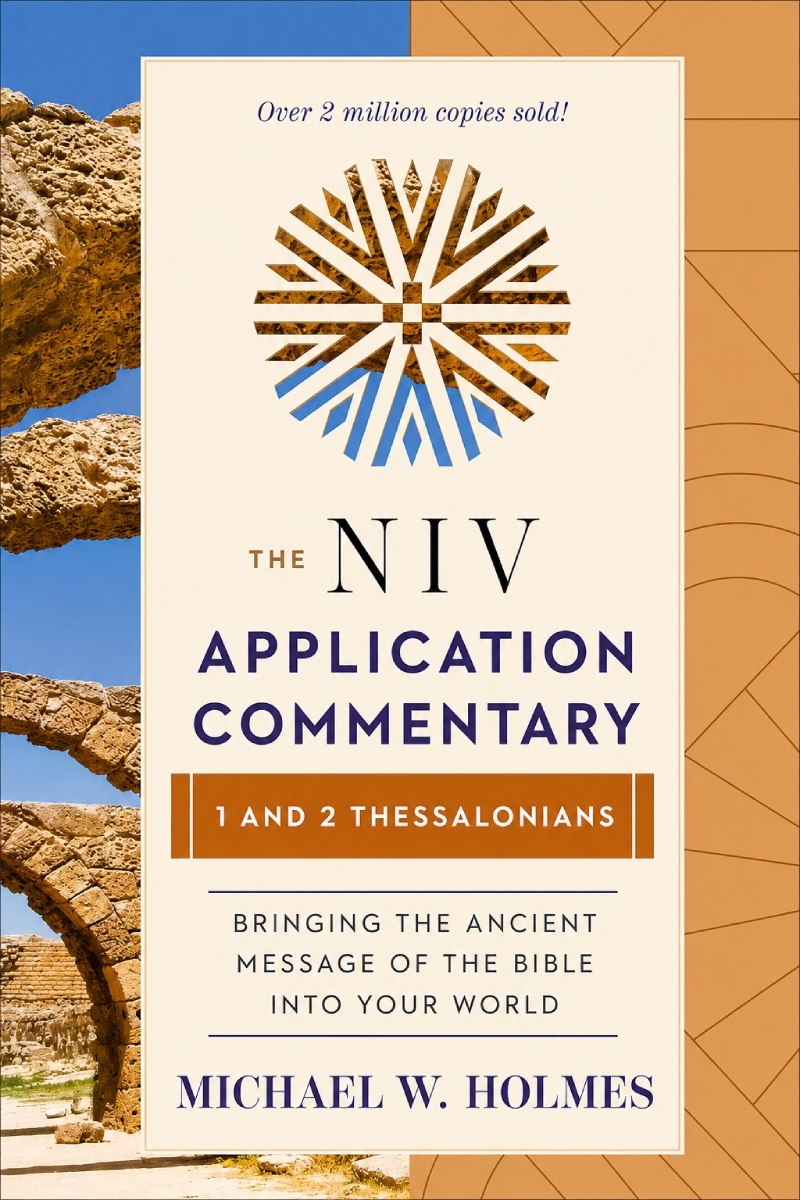
1 and 2 Thessalonians
Michael Holmes explains 1 and 2 Thessalonians for believers learning how Christian hope reshapes everyday life. Alongside the return of Christ, resurrection hope, the day of the Lord, and the man of lawlessness, he addresses holiness, sexual ethics, persecution, love within the church, work and idleness, spiritual responsibility, and faithful living while waiting for Christ.
Available Instantly
About This Book
Michael W. Holmes’s 1 and 2 Thessalonians explains Paul’s letters to a young Christian community learning how the gospel reshapes ordinary life while facing social pressure and persecution. Holmes places the Thessalonian believers in their Greco-Roman setting and emphasizes the challenge of learning a new Christian pattern of belief, ethics, relationships, and hope. The commentary’s major strength is the way it connects eschatology with daily living rather than treating the return of Christ as an isolated prophetic topic.
First Thessalonians begins with the congregation’s faith, love, hope, conversion, and endurance. Holmes follows Paul’s defense of his missionary conduct, his pastoral concern for the church, and his desire to strengthen believers who are suffering. The second half of the letter turns directly to conduct: holiness, sexual ethics, brotherly love, responsible work, relationships within the congregation, prayer, and responsiveness to the Holy Spirit.
The most prominent theological and pastoral questions concern the coming of Christ. In 1 Thessalonians 4:13–18 Holmes addresses the fear that believers who have died might somehow miss the Lord’s return. Paul’s answer grounds grief in resurrection hope: the dead in Christ will rise, and living believers will be gathered with them to the Lord. First Thessalonians 5 then addresses the day of the Lord and the impossibility of calculating its timing, calling believers to alert, faithful living rather than speculation.
Second Thessalonians returns to persecution, final judgment, perseverance, and confusion about the day of the Lord. Holmes gives substantial attention to 2 Thessalonians 2 and its difficult teaching about rebellion, the man of lawlessness, deceptive power, and the events associated with Christ’s coming. The commentary helps readers distinguish biblical hope from sensational prediction by keeping the prophetic material connected to steadfastness, truth, and faithfulness.
A second major practical issue is work and idleness. Paul’s instruction in 1 Thessalonians 4:9–12 and especially 2 Thessalonians 3:6–15 shows that expectation of Christ’s return does not excuse withdrawal from ordinary responsibilities. Christian hope should produce disciplined, loving, responsible living. Holmes therefore treats work, mutual support, congregational accountability, and avoidance of disruptive idleness as part of Christian discipleship.
The book answers questions readers still ask: What happens to Christians who die before Christ returns? How should believers grieve? What is the day of the Lord? Who is the man of lawlessness? How should Christians respond to persecution? Does expecting Christ’s return make everyday work less important? What does sanctification look like in sexual conduct and community relationships? How should a young church learn a distinctly Christian way of life in a surrounding culture with different values?
Because this is an NIV Application Commentary, each passage is moved from original meaning through enduring principles to contemporary significance. Holmes repeatedly joins doctrine and practice: eschatological hope strengthens perseverance, resurrection hope transforms grief, holiness governs sexuality, love shapes relationships, and expectation of Christ encourages responsibility rather than escapism. The result is a commentary especially suited to readers seeking both careful study of 1 and 2 Thessalonians and a practical understanding of how future hope should shape present Christian living.
Book Details

Reading Fit
STUDY LEVEL
Intermediate
STUDY SCOPE
Individual Book, New Testament
BOOKS INCLUDED

Edition & Format
PUBLISHED
May 3, 2011
AVAILABLE FORMATS
hardcover, kindle
LENGTH
420 pages

Topics Covered
You Might Also Like