
1 Corinthians
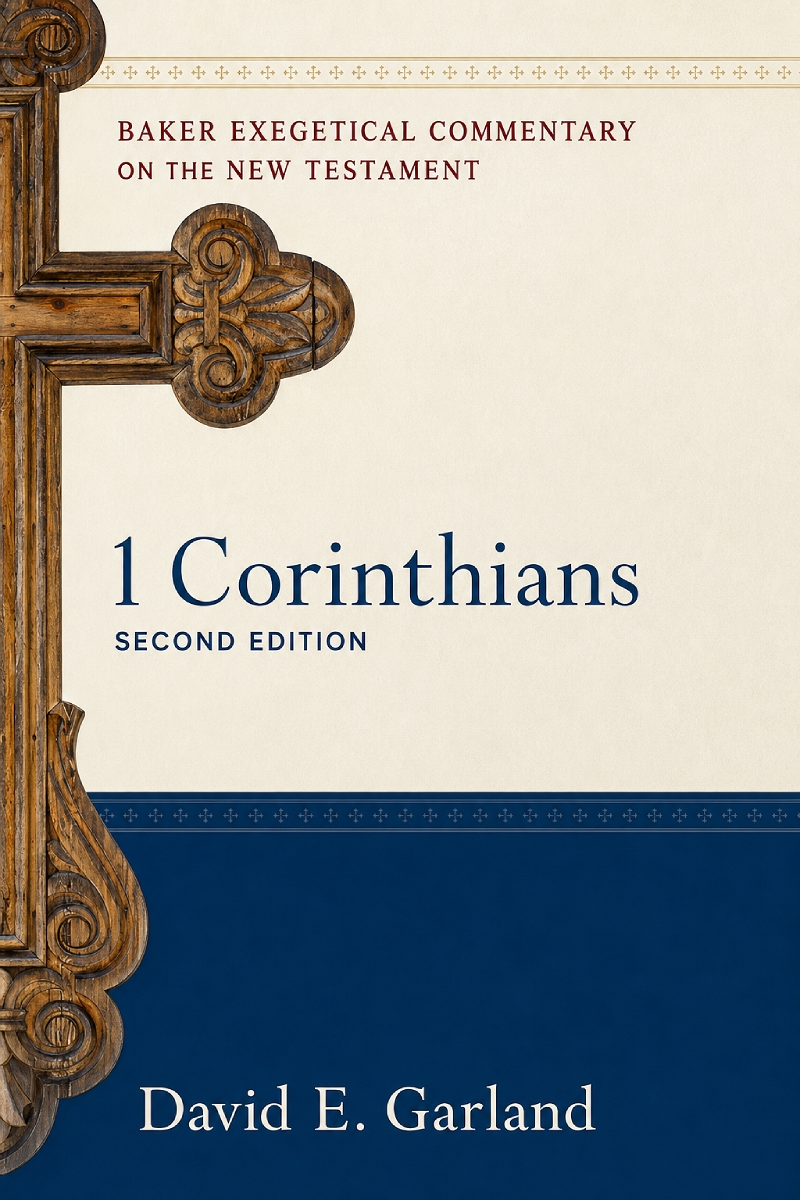
David E. Garland’s detailed commentary on 1 Corinthians shows how Paul confronts a divided church shaped by Corinth’s values and calls it to a life reordered by the cross, the Spirit, love, holiness, and resurrection hope. The volume combines close Greek exegesis with social context and sustained attention to Christian belief and practice.
Available Instantly
About This Book
David E. Garland’s second-edition commentary offers a detailed exegetical study of the whole of 1 Corinthians, combining close engagement with the Greek text, the social and cultural world of Roman Corinth, and the theological logic of Paul’s response to a troubled church. Garland treats the letter’s many practical disputes as interconnected expressions of a deeper problem: Corinthian believers have allowed the values of their surrounding culture—status competition, self-assertion, social privilege, public honor, and individual advantage—to shape life inside the church. Paul answers by reforming the church’s identity and behavior around the cross of Christ, the work of the Spirit, the common good, and the hope of resurrection.
The commentary gives sustained attention to 1 Corinthians 1–4, where factions and rivalries expose the church’s captivity to worldly standards of wisdom and status. Garland explains Paul’s proclamation of the crucified Christ as God’s wisdom and power, a message that overturns human boasting and relativizes social standing. The apostles themselves model the wisdom of the cross. This cruciform pattern becomes a controlling lens for the rest of the letter: Christian belief must produce a community whose relationships and conduct are visibly different from the competitive values of Corinth.
Garland then works through Paul’s treatment of sexual immorality, church discipline, lawsuits between believers, prostitution, marriage, singleness, divorce, and calling in 1 Corinthians 5–7. These sections address how the gospel changes bodily conduct, family life, community boundaries, and personal freedom. In 1 Corinthians 8–11 he examines the dispute over food offered to idols, participation in pagan settings, Paul’s surrender of apostolic rights, Israel’s wilderness failures in 1 Corinthians 10, and the Lord’s Supper. The recurring issue is whether knowledge, freedom, or social advantage will be used selfishly or subordinated to the good of others and fidelity to God.
Public worship and the life of the body of Christ dominate 1 Corinthians 11–14. Garland treats head coverings, divisions at the Lord’s Supper, the diversity and unity of spiritual gifts, the church as one body with interdependent members, the nature of love in 1 Corinthians 13, and the proper use of tongues and prophecy. The Spirit gives gifts not to create spiritual status but to build up the whole community. Love is therefore not an isolated devotional theme but the indispensable way in which gifted believers seek the good of others.
The extensive treatment of 1 Corinthians 15 explains the resurrection of Christ, the resurrection of the dead, the consequences of denying bodily resurrection, Adam and Christ, the defeat of death, and the transformation of the believer’s body. Garland shows how resurrection is integral to the gospel rather than an optional appendix: without it Christian preaching and faith collapse, while its truth establishes hope, perseverance, and the expectation of bodily transformation. The chapter culminates in victory over death and a call to steadfast labor.
Throughout the volume Garland connects theology and practice. The church’s unity, sexual ethics, worship, use of gifts, exercise of freedom, relationships across social differences, and endurance all flow from what Christians believe about the cross, one God, the Spirit, Christ’s resurrection, and final judgment. This makes the commentary especially useful for readers asking how Christian faith should reshape life in a culture whose values conflict with the gospel, how churches should handle division and moral disorder, how spiritual gifts serve the body, what Paul teaches about marriage and sexuality, why love governs Christian freedom, and what 1 Corinthians 15 teaches about resurrection and the future body.
Book Details

Reading Fit
STUDY LEVEL
Advanced, Intermediate
STUDY SCOPE
Individual Book, New Testament
BOOKS INCLUDED

Edition & Format
PUBLISHED
November 11, 2025
AVAILABLE FORMATS
hardcover, kindle
LENGTH
872 pages

Topics Covered
You Might Also Like