

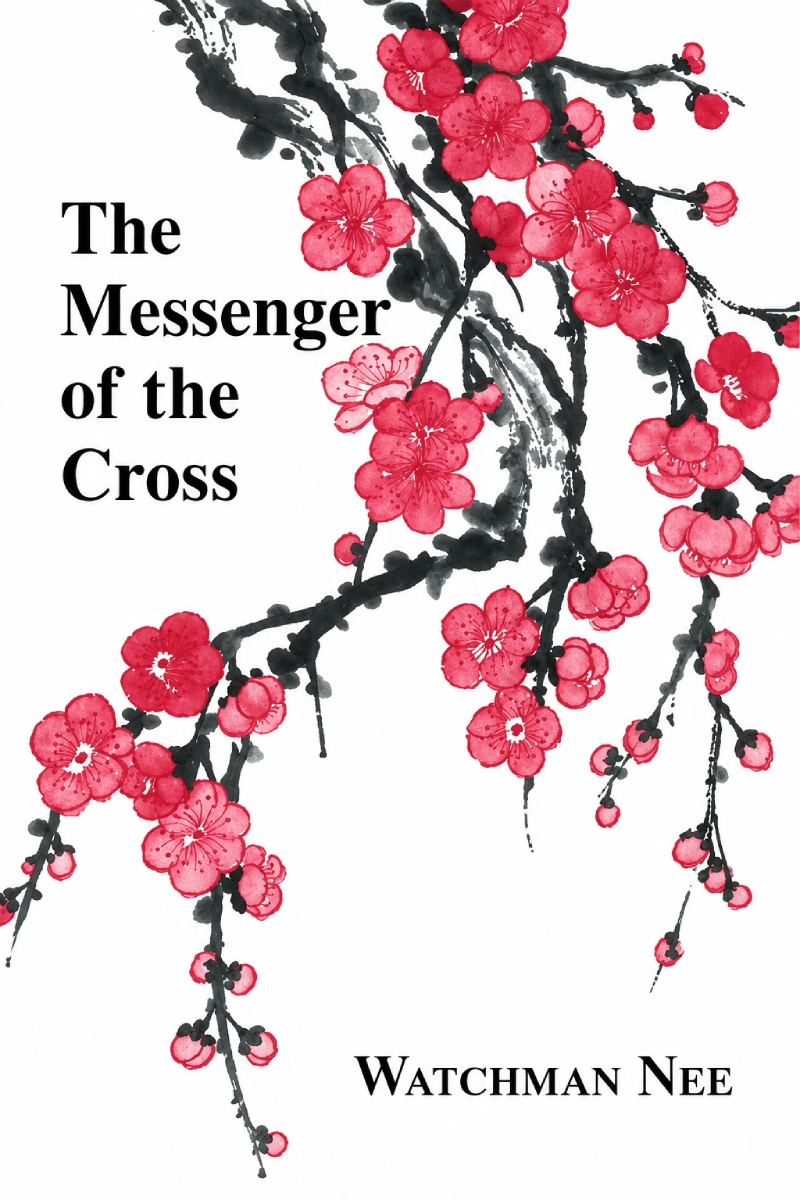
The Messenger of the Cross
Watchman Nee places the Cross at the source of spiritual life and ministry, asking not only what a messenger preaches but what kind of person carries the message. Across nine related studies, he develops life in Christ, the dealing of self, soul and spirit, God-given self-knowledge, obedience, the heart, independence from God, and renewal of the mind.
Available Instantly
About This Book
The Messenger of the Cross gathers nine related Watchman Nee messages around one governing conviction: the Cross of Christ is not only the content of Christian proclamation but the necessary inward principle of the person who serves God. Beginning from Paul’s determination in 1 Corinthians 2:1–5 to know Jesus Christ and Him crucified, Nee asks why biblically correct preaching can still produce little spiritual result. His answer turns from the message alone to the messenger. Christ’s finished work at Calvary must be known objectively, but the Holy Spirit must also apply the Cross subjectively so that ministry communicates spiritual life rather than natural talent, emotion, intellect, eloquence, or self-confidence.
The long opening study therefore treats Christian ministry and the self-life together. The messenger is a channel through whom the life of Christ is meant to pass. Natural ability is not rejected as though personality or intelligence were evil, but it cannot be the source of spiritual work. Nee repeatedly distinguishes what comes from natural strength from what the Spirit produces through a person who has accepted the working of the Cross. This gives the book direct relevance to preachers, teachers, evangelists, and other Christians asking why ministry can be doctrinally sound yet spiritually powerless.
“In Christ” develops the positive ground of Christian life. Nee directs attention away from self-improvement toward what God has already accomplished in Christ. Romans and 2 Corinthians support his teaching that freedom from condemnation, new-creation standing, and victory are received in Christ rather than manufactured by effort. Union with Christ is therefore inseparable from the book’s treatment of the Cross: God’s answer to the fallen self is not a stronger self but life in His Son.
“The Power of Choosing” develops obedience through Isaiah 7:14–15 and a sequence of Gospel scenes from the life of Jesus. Nee traces Christ’s refusal of evil and choosing of the Father’s will through His youth, baptism, temptation, rebuke of Peter, transfiguration, entrance into Jerusalem, and Gethsemane. The human will is not annihilated; it is brought into willing agreement with God.
“Spiritual or Mental?” and “The Dividing of Soul and Spirit” then address the source of spiritual knowledge and service. Second Corinthians 3:6 supports the contrast between the letter and the Spirit, while Hebrews 4:12–13 provides the controlling text for distinguishing soul and spirit. Nee argues that mental comprehension of truth is not the same as spiritual reality. The Word of God exposes the thoughts and intentions of the heart, and the believer must learn to recognize what proceeds from natural soul-power and what comes through the human spirit under the Holy Spirit.
“Knowing the Self” is framed by Deuteronomy 8:2 and the way God uses testing, failure, circumstances, and discipline to reveal what is in the heart. This is not an invitation to endless introspection. Nee’s emphasis is God-given self-knowledge that ends confidence in the flesh and turns the believer toward dependence on God. “How Is Your Heart?” continues the inward examination through Psalm 19 and David’s example, focusing on motives and the heart’s condition before God.
“Man’s First Sin” returns to Genesis 2–3. The trees in Eden become a framework for Nee’s distinction between receiving life from God and acting independently through the knowledge of good and evil. He identifies self-directed independence as the root principle of fallen life, even when outward action appears religious or morally good.
The final study, “Take the Helmet of Salvation,” applies this problem to the mind. Ephesians 6:17, Romans 8, Romans 12:2, and 2 Corinthians contribute to Nee’s treatment of the renewed mind. The Christian may possess the life of Christ yet still reason from Adamic, fleshly independence. Renewal enables the mind to serve spiritual life and discern God’s will rather than govern independently. Across these studies the book answers how the Cross qualifies a messenger, how self-life is dealt with, how soul differs from spirit, how God gives true self-knowledge, how obedience replaces self-will, and how the mind is renewed for spiritual life and ministry.
Book Details

Reading Fit
STUDY LEVEL
Advanced, Intermediate
STUDY SCOPE
Topical
BOOKS INCLUDED

Edition & Format
PUBLISHED
September 25, 2009
AVAILABLE FORMATS
paperback, kindle, audiobook
LENGTH
130 pages
· 4h 9m audio

Topics Covered
You Might Also Like