


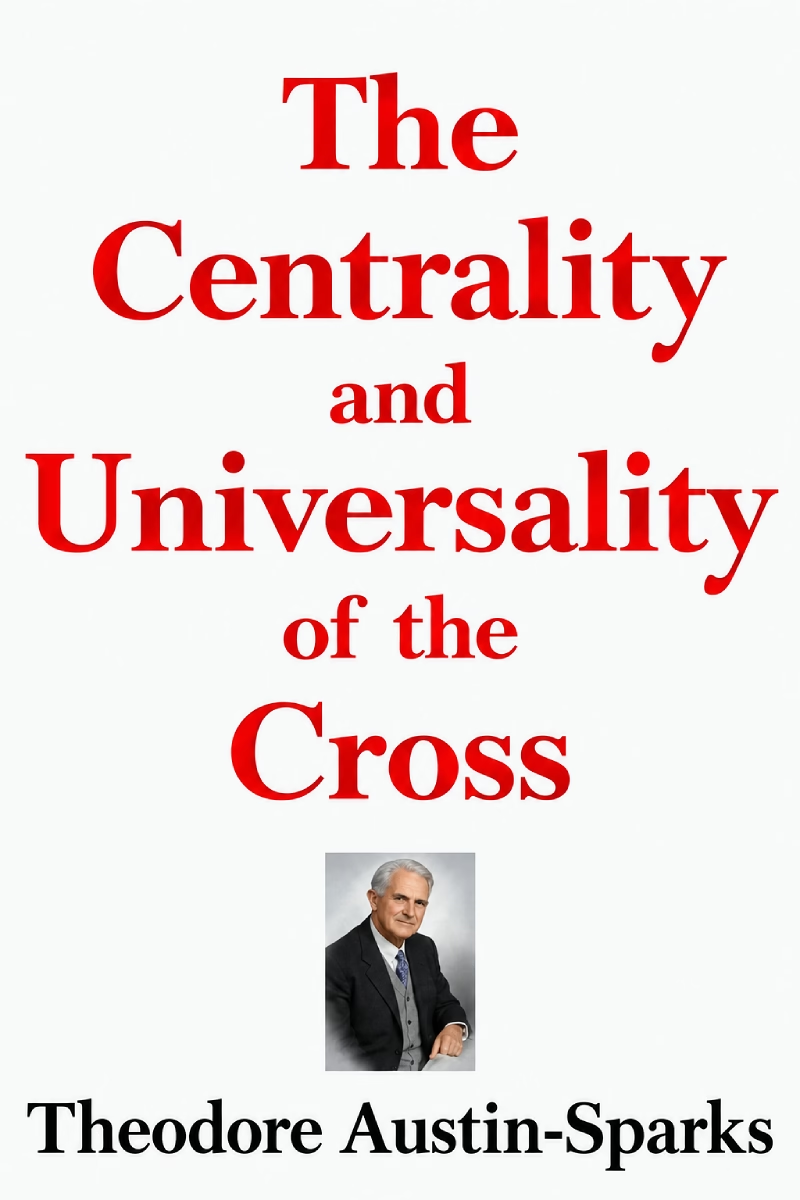
The Centrality and Universality of the Cross
T. Austin-Sparks places the Cross at the center of the whole Christian revelation and asks how Calvary governs everything God does. Across nine chapters he relates the Cross to Christ, the Holy Spirit, salvation, sanctification, the Church, the Lord’s return, the nations, Satan’s kingdom, and the heavenly realm, showing why no major part of Christian life can be understood apart from it.
Available Instantly
About This Book
The Centrality and Universality of the Cross presents the Cross of Christ as the governing center of God’s redemptive purpose and as the ground on which the major realities of Christian revelation must be understood. Across nine chapters, T. Austin-Sparks relates the Cross to the person of Christ, the Holy Spirit, salvation, the Lord’s coming again, the Church, the nations, the satanic kingdom, and the heavenly realm. The subjects are not treated as independent doctrines but as parts of one purpose centered in Christ crucified and risen.
The opening chapter connects Calvary with the person of Jesus Christ. Sparks argues that Christ cannot be adequately understood apart from the Cross and that the Cross cannot be separated from who Christ is. The divine way disclosed in Jesus runs contrary to natural human ideas of power, greatness, and fulfillment. Through death and resurrection, the Cross opens the way into union with God in Christ and establishes the principle by which the old order is judged and the life of the Son becomes the believer’s ground.
The Holy Spirit is then considered in direct relation to the Cross. Biblical patterns such as the Passover, the smitten rock and living water, Israel’s passage under the cloud, and the Jordan are used to show that the Spirit works on the ground established by Christ’s death. Spiritual life and power are therefore not improvements of the natural person. The Cross deals with the old ground so that the Spirit may bring believers into the life and order of the risen Christ.
The chapter on “so great salvation,” built around Hebrews 2:3, gives salvation a breadth extending well beyond forgiveness. Sparks develops substitution and representation and treats redemption, justification, reconciliation, regeneration, sonship, sanctification, and final glorification as aspects of the salvation secured in Christ. The Cross deals with guilt and condemnation, but it also reaches the source and course of the believer’s life. Sanctification is therefore not detached from Calvary; the same Cross that saves also governs spiritual transformation and conformity to Christ.
The Lord’s coming again receives separate treatment. Sparks refuses to isolate prophecy from the Cross. The second coming is presented as the consummation of what Calvary has secured, and readiness for Christ’s appearing is connected with the present work by which believers are brought into conformity to Him. The question is not only what will happen in the future, but whether the meaning of the Cross is becoming practical in the people who await the Lord.
Two chapters concentrate on the Church. The Church is a product of the Cross and exists on resurrection ground. Its unity, worship, vocation, and testimony cannot be produced by organization or natural religious energy. The Cross excludes the merely natural basis of church life, while resurrection brings the Church into a heavenly relationship with Christ. The corporate people of God are intended to express the person of Christ, the life of the Spirit, the greatness of salvation, and the purpose toward which the Lord’s return moves.
The scope then widens to the nations, the satanic kingdom, and the heavenlies. Spiritual warfare rests on an accomplished victory rather than human aggressiveness. Satanic authority is associated with the fallen ground that the Cross judges, while the believer and the Church stand in relation to the exalted Christ. Ephesians 3 and related passages place the Church in a heavenly vocation before principalities and powers, making known through the redeemed people of God the wisdom and purpose accomplished in Christ.
The book addresses readers asking why the Cross remains central after conversion, how Calvary relates to the Holy Spirit, what the Cross accomplishes in salvation and sanctification, how it creates the ground for true church life, why the Lord’s return cannot be separated from present conformity to Christ, and how Christ’s death and resurrection determine the believer’s relation to Satan and the unseen powers. Its governing claim is that the Cross is not one Christian subject among many but the divine center through which God’s purpose reaches the individual, the Church, the nations, and the heavenly realm.
Book Details

Reading Fit
STUDY LEVEL
Advanced, Intermediate
STUDY SCOPE
Topical
BOOKS INCLUDED

Edition & Format
PUBLISHED
April 8, 2012
AVAILABLE FORMATS
paperback, kindle
LENGTH
81 pages

Topics Covered
You Might Also Like