
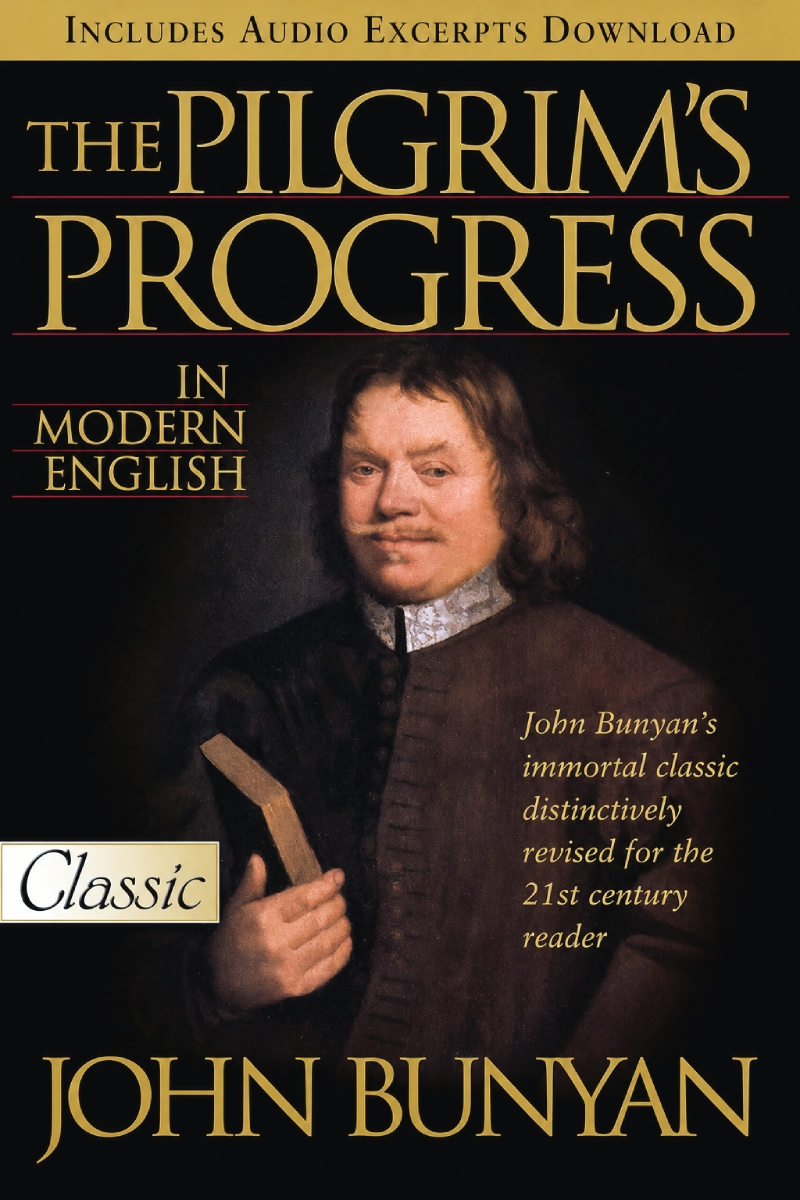
The Pilgrim’s Progress: In Modern English
John Bunyan’s two-part allegory follows Christian, then Christiana and her companions, toward the Celestial City. The Cross, Apollyon, Vanity Fair, Doubting Castle, false guides, faithful friends, family discipleship, and the final river portray salvation by grace, growth through trials, discernment, spiritual warfare, perseverance, and the hope of eternal life.
Available Instantly
About This Book
The Pilgrim’s Progress: In Modern English presents John Bunyan’s complete two-part Christian allegory in the modernized language of L. Edward Hazelbaker’s revised edition. Part One follows Christian from the City of Destruction to the Celestial City; Part Two follows Christiana, the children, Mercy, Great-heart, and a widening company of pilgrims over much of the same road. Together the two journeys portray the Christian life as a pilgrimage begun by grace and continued through faith, growth, temptation, fellowship, conflict, discernment, perseverance, and hope.
Christian’s journey begins when the Book awakens him to sin, judgment, and the need for deliverance. Evangelist points him toward the Wicket Gate, while Obstinate, Pliable, the Slough of Despond, and Mr. Worldly Wiseman show several ways conviction can be resisted, abandoned, or redirected into a false solution. Bunyan repeatedly contrasts God’s appointed way with apparently easier paths, moral substitutes, and religious appearances that cannot remove Christian’s burden.
The Cross is the decisive scene of pardon. Christian’s burden falls away there, making clear that the pilgrimage proceeds from received forgiveness rather than from an attempt to earn salvation. Part Two reinforces the point when Great-heart explains Christ’s righteousness and the ground of the pilgrim’s acceptance. Salvation by grace, faith in God, and the Cross of Christ therefore provide the foundation for the entire journey even though the allegory’s larger focus is the life that follows.
Bunyan then depicts spiritual growth through places and encounters that expose the pilgrim’s character. Hill Difficulty, the Palace Beautiful, the Valley of Humiliation, and the Valley of the Shadow of Death involve instruction, weakness, fear, courage, and dependence. Christian’s sustained combat with Apollyon is the clearest picture of spiritual warfare and resisting the devil. The pilgrim is wounded and pressured to turn back, yet continues by faith.
Vanity Fair portrays worldliness, social conformity, greed, entertainment, reputation, and persecution. Faithful’s trial and martyrdom show the cost of loyalty to Christ in a culture organized around contrary values. Christian’s later companionship with Hopeful, along with the hospitality and mutual care seen throughout Part Two, makes Christian fellowship a practical means of endurance rather than a minor background feature.
Spiritual deception and discernment recur across both parts. Formalist and Hypocrisy rely on appearance; Talkative possesses religious speech without corresponding life; By-ends adapts religion to advantage; Ignorance expects entrance without understanding the way of salvation; Flatterer misdirects the pilgrims; Temporary and other figures show how a profession of faith can fail to persevere. Bunyan therefore treats discernment as a continuing need, not merely a problem faced at the beginning of faith.
Doubting Castle and Giant Despair give concentrated form to spiritual doubt, discouragement, and near hopelessness. Christian and Hopeful escape when Christian remembers the key called Promise. The episode joins God’s promises to perseverance while warning that pilgrims can remain imprisoned by despair even when the means of release has already been given to them.
Part Two broadens the Christian-life picture. Christiana travels with her children; Mercy joins her; Great-heart guides, teaches, defends, and strengthens the company. The children are catechized, weaker travelers such as Mr. Fearing, Feeble-mind, and Ready-to-halt receive patient care, and giants that once threatened individual pilgrims are confronted corporately. Family discipleship, hospitality, and responsibility for weaker believers receive substantial treatment.
Scripture supplies the language and framework of the allegory throughout. Psalms and Proverbs shape prayer, wisdom, danger, and the path of the righteous; Isaiah contributes images of judgment, deliverance, and the pilgrim’s future hope; the Gospels, Romans, Ephesians, Hebrews, and Revelation materially support Bunyan’s portrayal of salvation, spiritual conflict, perseverance, the heavenly city, and eternal life.
The Pilgrim’s Progress helps readers ask what the Christian journey is actually like after conversion, how believers grow through trials, how to recognize false religion and misleading guidance, what to do with doubt and despair, how to resist spiritual attack and worldly pressure, why fellowship and family discipleship matter, and how faith perseveres toward the presence of God and eternal life.
Book Details

Reading Fit
STUDY LEVEL
Fundamental, Intermediate
STUDY SCOPE
Topical
BOOKS INCLUDED

Edition & Format
PUBLISHED
February 1, 2000
AVAILABLE FORMATS
paperback, hardcover, kindle, audiobook
LENGTH
526 pages
· 5h 27m audio

Topics Covered
You Might Also Like